Friday, 17 July 2015

Bits and Pieces (viii): Syriza Fiasco Edition.


It should not come as a surprise, after the Syriza fiasco, but talking-heads of all kinds came up with their dicta on what happened, why, and what conclusions one should draw from that.

Take, for instance, this guy (a Post Keynesian social democrat, I guess). He starts by acknowledging that "the [i.e. Syriza/Troika] deal, obviously it looks bad. No sense in spinning". Sounds promising, yes? An unflinching look at reality, to learn from it.

This is the first lesson one is supposed to learn:
"The euro system today is an instrument in the hands of European capital to roll back the gains of social democracy."
Sorry?

The author calls the welfare state and social security "the gains of social democracy".

So? What's wrong with that?

Let's answer in two ways:

  1. The author confuses apples with oranges. Welfare state is a "concept of government in which the state plays a key role in the protection and promotion of the economic and social well-being of its citizens" (here). Social democracy is a "political ideology that advocates a peaceful, evolutionary transition of society from capitalism to socialism" (here): different things. European capital has little interest in rolling back ideologies, they care about money. What they are rolling back is social security, labour laws, public ownership of enterprises: you can and often have that without and even in spite of social democratic parties.
  2. Many people, with many different political ideologies, contributed to the formation of the welfare state: the so-called Iron Chancellor, Bismarck, is considered the father of the German welfare state and he was far from being a social democrat (just as today's "social democrats" are far from being 19th century social democrats).

His "unflinching" look at reality turns out to contain plenty spin. Oh, well.

----------

Writing in the second decade of the 21st century, Prof. Barkley Rosser compares the "parallel lives" of Alexis Tsipras and George Papandreou (here).

Rosser's focus is on great individuals' struggles. Unlike the previous author, Rosser's narrative does not include -- explicitly, at least -- any consideration about class conflicts. If that's the case -- and I hope to be mistaken -- Rosser is following an old tradition: history is the result of great men (usually, men) and their travails and whims. History is still the product of conflict, but personal conflict, only: no classes, thank you very much. More like Moses vs the Pharaoh, Charlton Heston vs Yul Brynner, in the old movie. Or think of Thomas Carlyle's 1841 "On Heroes and Hero Worship and the Heroic in History".

That was a characteristic of 19th century Romanticism, which people like Nietzsche and Keynes cultivated, long after Romanticism had already lost its edge.

Apparently, the old philosophy of history is the new black.

----------

I may be excessively suspicious, but are people trying to re-brand Yanis Varoufakis, after resignation, into a Hero, maybe even into a second coming of our Lord?

Well, if I am mistaken on that, at least I'm not alone.

----------

All this talk about heroes and the new "Mad Max: Fury Road" reminded me of this 1985 song, sung by Tina Turner, from the "Mad Max Beyond the Thunderdome" soundtrack:


----------

Sadly, conservative columnists' efforts are probably among the most accurate and fairest comments on Syriza. Take Ambrose Evans-Pritchard's recent one, for instance:
"The Left let itself become the enforcer of reactionary policies and mass unemployment because of the euro."
It may be a lot less (self-) flattering for social democrats, Fabians and the fashionable, Austro-Keynesian, non-leftist leftists (or their equally pseudo-intellectual puppeteers), but there's plenty I find myself in agreement with. But I'll leave further comments for a future opportunity.

Monday, 13 July 2015

McCloskey: M'Lord Keynes was a Sophist.


In her 1996 column Other Things Equal, Prof. Deirdre McCloskey describes Keynes ("Keynes Was a Sophist, and a Good Thing, Too") as a "sophist" and his work as "sophistry".

Against those for whom sophist is a "term of contempt", for McCloskey (arguably a proud sophist and rhetorician herself):
" 'Sophistry' in Plato's sense means 'mere verbal trickery,' as against Really Knowing, the sort of thing a true philosopher Knows. (…)
"The contrary view, that of the sophists themselves (…) is that we humans must get along on exchanges of words, and had better learn to use them well."
As McCloskey explained elsewhere, given that things cannot be Really Known, humans are left to argue their positions, in the most effective way, not with the aim of reaching or even approaching the Truth (which is unknowable), but to prevail in arguments, much as done in legal procedures or in debating societies: you are assigned a thesis, whether you believe in it or not, and your task is to argue it (more on this here).

Following McCloskey, that's where rhetoric and persuasion (which Keynes mastered) play a role:
"Democracies and courts of law [and economic theory and policy, apparently] depend on an art of persuasion exercised in the here and now".
McCloskey uses this "rehabilitated" meaning of sophist/sophism to distinguish Keynes and his work from lesser economists, steeped in Plato's anti-sophistic tradition:
"Right from the beginning Platonic thinkers like Friedrich Hayek and J.R. Hicks could not grasp his [i.e. Keynes'] method".
For McCloskey two main symptoms reveal Keynes' sophistry:
  1. "Keynes' lifelong commitment to adversarial and sophistic styles of engagement";
  2. "A sign of a sophist -- a sign considered by Platonic thinkers as the chief evil of sophism -- is the ability to change one's mind".
Unfortunately, McCloskey did not offer any quotation as evidence. However, regulars of this blog may find a good illustration to point (1) here.

Regarding point (2). The "Platonic" Hayek himself demonstrated exasperation with Keynes' tendency to come up with self-contradictory arguments (or Keynes' sudden changes of mind; about the apparently apocryphal quote, here):
"He was so convinced that he was cleverer than all the other people that he thought his instinct told him what ought to be done, and he would invent a theory to convince people to do it. That was really his approach." (Hayek et al, 1994)
Lord Skidelsky (whose work apparently influenced McCloskey):
"Hayek was infuriated by the rapidity with which Keynes changed his theories. This seemed to show he lacked scientific principles. Statesmanship without principle, Hayek would have said, is the slippery slope to totalitarianism." (Skidelsky, 2006, or here)
----------

I believe McCloskey -- a Post Modern economist -- has a point about Keynes' sophistry. I, however, find it hard to share her upbeat assessment. Whether that was a good thing it's a matter of opinion.

Still, I think I can contribute to McCloskey's argument: there is another sense -- perhaps less obvious -- in which Keynes fits the sophist profile:
"[S]ophists have been many things to many people. (…)" (Duke, 2015, or here)
Again, regulars may have already stumbled on an example of that in these pages: Keynes as a conservative/centrist/leftish figurehead depending on the political orientation of his follower.

In fact, Keynes and Keynesianism can be acceptable to both PoMo and positivist Post Keynesians, provided they (like their Master) do not place too much value on coherence:
"(…) For Hegel (1995/1840) the sophists were subjectivists whose sceptical reaction to the objective dogmatism of the presocratics was synthesised in the work of Plato and Aristotle. For the utilitarian English classicist George Grote (1904), the sophists were progressive thinkers who placed in question the prevailing morality of their time. More recent work by French theorists such as Jacques Derrida (1981) and Jean Francois-Lyotard (1985) suggests affinities between the sophists and postmodernism." (Emphasis added) 
Or here and here. His lordship, after all, created a school of thought.


References:

Duke, G. (2015). The Sophists (Ancient Greek). In: The Internet Encyclopedia of Philosophy, ISSN 2161-0002, <http://www.iep.utm.edu/>. July 2, 2015.
Hayek, F., Kresge, S., Wenar, L. and Hayek, F. (1994). Hayek on Hayek. Chicago: University of Chicago Press.
McCloskey, D. (1996). Keynes Was a Sophist, and a Good Thing, Too. Eastern Economic Journal, 22(2), pp. 231-234. <http://college.holycross.edu/RePEc/eej/Archive/Volume22/V22N2P231_234.pdf>
Skidelsky, R. (2006). Hayek versus Keynes: The Road to Reconciliation. In: E. Feser, ed., The Cambridge Companion to Hayek, 1st ed. Cambridge: Cambridge University Press.<http://www.skidelskyr.com/site/article/hayek-versus-keynes-the-road-to-reconciliation/>

Tuesday, 7 July 2015

Straight from the Horse's Mouth.


h/t Houses and Holes (Macrobusiness):
"PRIME MINISTER: Ok, do we have any questions?
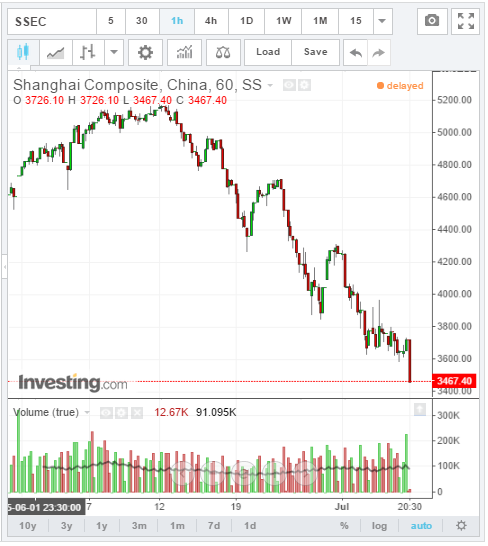
"QUESTION: Prime Minister, how concerned are you about the problems in China and Greece, those economic problems spreading to Australia and especially the plunge in the Chinese stock prices?
"PRIME MINISTER: Michael, look, the important thing is to do whatever we can to build a strong and prosperous economy locally, and again I get back to the Grocery Code of Conduct. This is about ensuring that we have the strongest possible local businesses to supply the strongest possible local businesses. We have a great supermarket system. That rests on the shoulders of great local suppliers and this is about ensuring that we continue to have very strong local suppliers, best possible product at the best possible price so that we get the best possible deal for consumers – and if we do that we will avoid the problems that we see overseas". (here)
[Bloody blah, bloody blah]
"QUESTION: PM, are you concerned that the Chinese Government potentially has intervened in their stock market to try and prop it up given the losses that have been experienced over the last two weeks?
"PRIME MINISTER: Well, again, look, I’m not going to offer a running commentary on what other governments do. My business today and every day is to ensure our country is in the best possible position to deal with whatever comes. Whether it be challenges to our economic security, whether it be challenges to our national security, the job of this Government is to make our country as strong as it possibly can be and that’s why the small business budget boost was so important with the instant asset write-off which has done so much to boost confidence, and that’s why today’s Grocery Code of Conduct is so important. It’s all about producing stronger local businesses and if we’ve got stronger local businesses, we’ll have a stronger economy and we’ll be very well placed to deal with whatever the future throws at us."
Paraphrasing PM Abbott, well, again, look, he's not concerned at all about the terrifying power of Keynes' digestion Animal Spirits.

But, but, but, all local VSPs are really, really concerned …

So, what gives? Is the Animal Spirits for real or maybe Abbott -- believe it or not -- for once is right?

----------

Man, you've gotta love the Animal Spirits/Confidence Fairy thing: it may not explain shit, but it gives me hours of fun.

UPDATE:
08-07-2015. Minutes after posting this, Houses and Holes posted this:

"The Shanghai stock market is open and down she goes 8%:"

(source)

Animal Spirits!