Showing posts with label Spain. Show all posts

Friday, 21 July 2017

The Angel and Linkin Park.


Linkin Park's "Burn it Down" video still speaks a lot to me.


It matches well with Ricardo Bellver's "Fuente del Ángel Caído" in the Buen Retiro Park in Madrid:

----------

RIP Chester Bennington.


Image Credits:[A] Detail of the Ángel Caído de Bellver, crowning the eponymous monument in the Parque del Buen Retiro in Madrid, Spain. Author: Laussy. My usage of the file does not suggest its author's endorsement of me or of the usage itself. Licenced under  GNU Free Documentation License. Wikipedia.

Friday, 6 February 2015

Brahim-Djelloul/Capuçon/Villa-Lobos: Bachiana nº 5.


Normally, when people outside of Ibero-America think of Ibero-American music, if they think of anything, they think of samba, bossa nova, salsa, maybe Tex-Mex (update: flamenco and tango). That's it.

Spain and Portugal themselves are assumed to have little of its own to add to the list.


That was Amel Brahim-Djelloul (soprano), Gautier Capuçon (cello) and the Orchestre du Violon Sur Le Sable interpreting the Brazilian composer Heitor Villa-Lobos' Bachiana nº 5.

----------

Currently, no heterodox economist is more talked about than Yanis Varoufakis (and for good reasons, too). Here is one of my posts on Varoufakis: his views on Post-Modernism.

----------

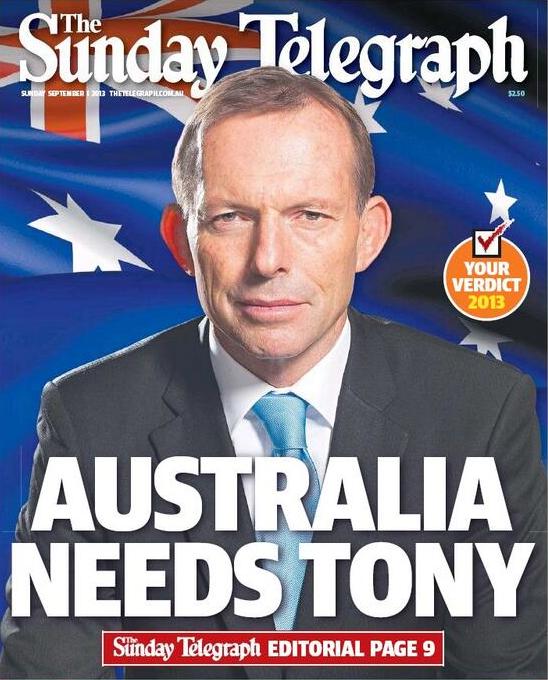
As Tony Abbott may face next week a secret ballot from his party colleagues to decide his future as PM, I was reminded of this:

(source)
Nothing like a good laugh on a Saturday morning.

Thursday, 25 December 2014

Mecano: "La (Otra) Fuerza del Destino".


Economist, teacher, writer, musician, TSSIer, blogger and nice guy extraordinaire, Peter Cooper reminded me of pop songs from the 1980s.

Well, Pete, here's a 1988 song I always remember, by Spanish band Mecano. Ana Torroja sings "La Fuerza del Destino".

Yes, you guessed it, the pretty and mischievous face belongs to Penélope Cruz.


Ojalá la vida fuera como las canciones; pero a veces no hay final feliz.

Tuesday, 9 December 2014

Sumi Jo/W. Kilar: "Vocalise".


Not a single word is said (none is needed, either). Roman Polanski's "The Ninth Gate" closing titles, based loosely on Arturo Pérez-Reverte's "El Club Dumás".

Wojciech Kilar (composer) and Sumi Jo (soprano); the City of Prague Philharmonic and Chorus, directed by Stepan Konicer.

The DVD subtitles are crap, as in really, really crap (Traductor, aunque Ud. no lo crea, en España se habla español, no italiano.).

PS. Ask yourself, whose point of view is that and what is it you are hearing and seeing?

Friday, 28 November 2014

Domingo y Gardel: "El Día que me Quieras".


From this Saturday on I'll do my best to post a link to a musical piece, which I find personally meaningful (sorry, youngsters, you'll probably hate me for this).

To start, I couldn't possibly get anything better than Plácido Domingo, singing Carlos Gardel's “El Día que me Quieras”. Domingo, on top, chose three great songstresses!


You may not remember them, but I few years back the Three Tenors (Domingo, José Carreras, and -- What's his name? The Italian fellow … -- just kidding, Luciano Pavarotti was great, too, even if he wasn't Spanish) were all the rage.

I didn't like the musical accompaniment that much, unfortunately: too “American”. Oh, well.

Wednesday, 3 July 2013

European Languages Quiz.

Do you proudly represent the European Union? Do you speak European languages?

Test your language skills here!

European politician? [A]

How do you say "chicken" (a.k.a. Gallus gallus domesticatus):

In French
(a)    François Gérard Georges Nicolas Hollande, or
(b)    Poulet?

In Portuguese
(a)    Pedro Manuel Mamede Passos Coelho, or
(b)    Galinha?

In Spanish
(a)    Mariano Rajoy Brey, or
(b)    Gallina?

In Italian
(a)    Enrico Letta, or
(b)    Pollo?

In German
(a)    Werner Faymann, or
(b)    Huhn?

Answers: Both ways. Update: that was a trick question: (a) = (b).

Optional question for extra credit: A person who uses strength or power to harm or intimidate those who are weaker, is called a
(a)    bully,
(b)    Nelson Muntz, or
(c)    Barack Hussein Obama?

Answer: Make a wild guess.

Image Credits:
[A] Gallus gallus domesticatus. File licensed under the Creative Commons Attribution 3.0 licence. Wikipedia. Author: Ronald Duncan. My use of the file does not in any way suggests its author endorses me or my use of the work.

Friday, 31 May 2013

The Thirtieth of May, 2013.

205 years ago, almost to the day, the Spanish people rebelled in Calle Alcalá, near the Puerta del Sol, in Madrid.

"The Second of May 1808",
by Francisco de Goya (1814) [A]

----------

Spain was of strategic value to the French emperor Napoleon. Taking advantage of the personal conflict between the Spanish king Carlos IV of the house of Bourbon and his heir, Fernando, Napoleon proposed a French-Spanish alliance against Portugal and Britain.

To gain the acquiescence of the Spanish prime minister, Manuel Rajoy de Godoy, the French and Fernando, who were in cahoots, promised him he would act as figurehead in a future pro-French Portuguese puppet government.

During November 1807, under the guise of reinforcing their Spanish "allies" and with Carlos' reluctant consent, a French army, under the command of Marshal Joachim Murat, crossed the border. Although Godoy was ecstatic, the measure proved highly unpopular with the Spanish people.

To make good his side of the bargain, and mounting on the opposition bandwagon, Fernando instigated the March 17th anti-Godoy riots in the town of Aranjuez, 50 km south of Madrid, forcing Carlos to dismiss Godoy. A few days later Carlos himself had to abdicate, leaving the throne to Fernando.

Fernando, however, did not count on the French having different ideas: Murat refused to recognize him.

Both Carlos and Fernando fled to France, to appeal to Bonaparte. To their surprise, Bonaparte decided to declare the Bourbon dynasty deposed and install his own brother, Joseph, as new Spanish king.

Faced with the news, the Spanish people took to the streets of Madrid on the Second of May, 1808, against the North African mercenary troops, known as Mamelukes, working for the French. The scene was represented by Goya in the painting above.

The following day, the French unleashed brutal and generalized repression against the Spanish people:

"The Third of May 1808",
by Francisco de Goya (1814) [B]

----------

The video below shows Troika mercenary occupation troops, also known as Mossos, charging on the 30th of May, 2013, against Spanish firefighters, protesting in Barcelona against the Troika puppet government of Mariano Rajoy/Artur Mas. (See here, in Spanish)


----------

The war in the Peninsula ended in 1814, with Napoleon's defeat.


Image Credits:
[A] "The Second of May 1808: The Charge of the Mamelukes", by Francisco de Goya (1814). Wikipedia. Source: Museo de El Prado.
[B] "The Third of May 1808: the shootings in Prince Pious' mountain", by Francisco de Goya (1814). Wikipedia. Source: Museo de El Prado.

Monday, 18 March 2013

Power is not What it Used to Be.

Moisés Naím (¿Qué le está pasando a los poderosos? El País, March 17; Corporate Power is Decaying, get Used to it, February 21) finds that traditional power structures are shifting.

Political, military, technocratic and religious leaders, Naím observes, have seen their power curtailed:
"In his first speech before the Congress, in 2009, president Obama proposed an ambitious budget with energy, health and education investment.
" 'This is America', Obama proclaimed. 'Here we don't go for what's easy'.
"Four years later, even what was easy has become impossible.
" 'Let's agree, here and now, to keep the Government operating, paying its bills on time, and to protect the US credit', begged Obama to the Congress a few weeks ago. Evidently, the president of a superpower must not feel very powerful"
. (My translation, from Spanish)
Naím should know. The former Venezuelan economics professor ("IESA, Venezuela's main business school"), minister (1989 to 1990), and Venezuelan Central Bank director; currently El País columnist, author, founder and chairman of the board of the Group of 50 and senior associate in the International Economics Program of the Carnegie Endowment for International Peace, was one of the minds behind Carlos Andrés Pérez's 1989 "Gran Viraje" (great turnaround) Washington Consensus inspired package of shock economic measures, negotiated with the IMF. (See here, here and here)

Coming after years of repeated, painful and ultimately fruitless macroeconomic adjustments instigated by the IMF, plus an apparently endless stream of corruption scandals and the odd massacre, the newly elected Acción Democrática party (social democrat) government, headed by Pérez, was never going to have an easy job.

Their task was made all the more difficult by Pérez himself, who, during the 1988 election campaign adopted an unusually strident populist rhetoric, appealing to the impoverished urban proletariat, largely non-white.

Pérez, well-known for his personal links to the so-called "12 Apostles" group of businessmen, promised to reverse the "stabilization" reforms already adopted. Further, Pérez denounced the IMF as the "neutron bomb that kills people but leaves buildings standing".

Pérez's main opponent, Eduardo Fernández (Partido Social Cristiano Copei, Christian democrat) stuck to the conservative IMF mantra. While appealing openly to the business elites, the Fernández package was sold to the relatively sheltered middle-income sections of the population, mostly Caucasian, as the "responsible", solution to the by then already chronic crisis.

It was predictable, then, that Pérez's surprising announcement, in January 23, 1989 of his ironically titled "Great Turnaround", in agreement with the IMF after being elected (53% of the valid votes, against Fernández's 40%), on a radically anti-IMF platform, would cause, let's say some "discomfort" among Pérez's constituents, leading to a chain-reaction: indignation about the "turnaround" led to nation-wide rioting (known as the Sacudón of February, 27, 1989, about which I've written), the breach of the public order led to bloody, brutal repression, which further fueled anger and generated generalized discontent shown in continuous public manifestations; the loss of public legitimacy led to two failed military putsch attempts, followed by Pérez's impeachment (August 31, 1993) and eventual conviction on corruption charges, to the eventual collapse of the political status quo and to Hugo Chávez's election.

----------

While Naím shows insight in noticing this shift in political power, it's not clear, however, that he understands the ultimate causes of the shift he describes.

It's not clear, for instance, that this shift is due to "Twitter and Facebook", as Naím suggests; or that "an impatient, better informed middle-class, with more aspirations, is making the exercise of power more difficult", as he claims.

To me, it looks more like the arrogant and greedy elites sometimes push their luck beyond the breaking point. That, of course, is too plain an explanation to justify a book.

----------

Another day I'll have to address Naím's twin claim: that the corporate boardroom has also lost power.

By those extraordinary coincidences, the ABC's Four Corners is broadcasting tonight the PBS Frontline's "The Untouchables":
"In this investigation we hear from industry whistleblowers who were forced to approve loans they felt would almost certainly fail.
"It's over four years since the global financial crisis began. We now know the crisis that took the world to the brink of financial meltdown - throwing millions of people out of work and devastating entire communities - began on Wall Street.
"In the wake of the crisis, the newly elected President Barack Obama promised to make greedy bankers pay for their crimes. Four years on, not a single senior Wall Street executive has faced criminal prosecution. The question is why? Are they simply too big to jail?"
Hopefully, that could give me some argument to reply to Naím's "boardroom" claim.

Thursday, 14 March 2013

Lest we Forget...

Yanis Varoufakis:
"Europe is being torn apart by a titanic clash between (a) the unstoppable popular rage against misanthropic austerity policies and (b) our elites’ immovable commitment to more austerity. Precisely how this clash will play out no one knows, except of course that the odds do not seem to be on the side of the good. While at the mercies of this crushing uncertainty, it is perhaps useful to take a… short quiz. So, dear reader, will you please read the following ten quotations and, while so doing, try to imagine who uttered or wrote these words?" (See here)
Take Varoufakis' quiz. It's chilling.

Wednesday, 27 February 2013

Spain: Sabre Rattling.

Ever since the Catalonian regional government called for a referendum on the issue of secession, there have been talks in Madrid about the need for military intervention.

Yesterday, what were mainly vague, private comments, may have become more concrete and public, after an active service officer, general Juan Antonio Chicharro, speaking in a public colloquium, sketched what an observer qualifies as a juridical rationale "for a military intervention to avoid the secession". (See here, in Spanish, my translation)

General de División (equivalent to a US Army Major General) Chicharro, former commander of the Spanish Marines, made the pronouncement at the Gran Peña, a traditional club frequented by reserve officers, during a colloquium to which figures linked to academic and judicial circles were also attending.

According to the El País report, Chicharro's intervention, which fell short of calling for a coup d'etat against civilian authorities refusing to take military measures against separatists, gained relevance as he is an active member of the Army Reserve. In Spain the military jurisdiction outlaws the public expression of opinions suggesting the dereliction of the neutrality duty in relation to political matters.

Coming when the Catalonian regional government seems decided to proceed with the separation and when the federal government, headed by conservative Mariano Rajoy, has shown itself incapable of solving the economic crisis affecting Spain and is besieged with generalized accusations of corruption, Chicharro's opinions were received with approval by the public present at the colloquium, according to the El País.

The last attempt at a military putsch in Spain took place in February 1983, 32 years ago.

Update:
02-03-2013. The commotion created by general Chicharro's intervention in the Gran Peña moved the Spanish Defence Ministry, predictably, to open an investigation. PSOE and other parties manifested their condemnation to any form of extraconstitutional exit to the secession movements. General Chicharro sent a letter to El País denying his intervention in the colloquium aimed to justify a military intervention.

Wednesday, 13 February 2013

Moving to Oz? (X)

A few weeks ago a study commissioned by the Fair Work Ombudsman over the matter of unpaid work experiences and internships was released.

The study was conducted by professors Andrew Stewart and Rosemary Owens, from the University of Adelaide's Law School.

Unpaid work experience, as I remarked here, is a problem affecting graduate and skilled migrant workers arriving in Australia as part of the independent migrant stream. It has an equivalent on unpaid internships offered to Australian undergraduate students and newly graduated professionals.

The video below contains the announcement made by the Fair Work Ombudsman, Nicholas Wilson:


From the University of Adelaide's media release:
"There is significant evidence of unpaid work experience, internships and trial work that could be seen as undermining the award system and other labour standards," says Professor Stewart. (...)
"However, there are real instances of employers who repeatedly use unpaid internships instead of paying someone a wage to perform that labour. At this point, as we've seen in countries like the United States, 'experience' can move into the more dangerous territory of 'exploitation'," she
[Professor Owens] says. (...)
Professor Stewart says: "Free labour can result in employment being squeezed out, which means someone is missing out on making a livelihood. If someone is not earning a fair day's pay for what is actually productive work, this could also mean a breach of the Fair Work Act".
The Fair Work Ombudsman's YouTube site, which can be found here, contains orientation material useful to workers.

These are the links to the Fair Work Ombudsman's website, Facebook page and Twitter page.

[Updated on 24-02-2013: The Unions Australia website is designed to facilitate the process of joining a union.]

Note:
I am including the YouTube video as a free service to prospective migrants, young workers and anyone who might be concerned. If you work for the Fair Work Ombudsman and know for a fact that by including that link I am infringing any rights or in any way acting inappropriately, let me know and I'll remove it.

Tuesday, 5 February 2013

Merkel, Kohl and Rajoy.

A political funding scandal in Germany started in November, 1999, when the district court of Augsburg ordered the arrest of former CDU (conservative, centre-right) treasurer Walter Leisler Kiep in connection with alleged dealings with lobbyist, fundraiser, arms dealer and businessman Karlheinz Schreiber, fugitive at the time.

Kiep admitted to receiving an illegal donation in 1991 on behalf of the CDU, headed at the time by former chancellor Helmut Kohl.

Helmut Kohl. [A]

Kohl denied any knowledge; while his protégé, Angela Merkel ("mein Mädchen", "my girl", Kohl affectionately called her) demanded a quick and sweeping investigation.

The investigations, conducted with typical Germanic efficiency, were quick indeed. Kiep and other CDU leaders would regularly disclose information detailing Kohl's involvement.

Sometimes, by himself, sometimes with Wolfgang Schäuble (CDU chairman) another of his protégés, Kohl would initially deny the information, just to recant a few days later.

December 22, 1999: Merkel wrote in the Frankfurter Allgemeinen Zeitung: "Kohl has harmed the party". After asking the CDU to distance itself from Kohl, Kohl's former girl writes: "The party must therefore learn to walk by itself, confidently, to continue without its old warhorse, as Helmut Kohl has frequently called himself". (See here in German, my translation)

The ties with the "old warhorse" severed, Schäuble was left holding loose reins, only.

February 16, 2000: Schäuble resigns as CDU chair and parliamentary leader. A few weeks later, as a reward for her moral fortitude and leadership, Merkel went on to replace Schäuble as CDU chair.

Wolfgang Schäuble, left; Angela Merkel, right. [B][C]

----------

February 4, 2013: German bankers' money at stake, chancellor Merkel provides her moral support to Spanish PM Mariano Rajoy, who has been accused of corruption in his own country in a modern day public financing scandal reminiscent of the old German scandal:
"Germany had 'great respect and great admiration' for Madrid's economic reforms, Merkel said. Strict austerity measures and the nationalizations of several of Spain's largest banks had helped put the debt-stricken country back on track. These steps would have a positive effect on Spain's future, she added.
" 'We have a trustworthy relationship', Merkel said, pledging further support to the eurozone partner". (See here)
No calls for quick and sweeping investigations. No severing ties with "old warhorses".

Image Credits:
[A] Helmut Kohl. Public domain image. Wikipedia.
[B] Wolfgang Schäuble. Public domain image. Wikipedia.
[C] Angela Merkel. File licensed under the Creative Commons Attribution-Share Alike 3.0 Germany licence. Wikipedia. Author: Armin Linnartz. My use of the file does not in any way suggests its author endorses me or my use of the work.

Wednesday, 30 January 2013

Moving to Oz? (IX)

Amanda Pregl (25yo), a young German national visiting Sydney on a student visa, became this week a bit of an example of what may be awaiting thousands of foreign visitors or migrants to Australia.

According to Pregl, although for two weeks she worked seven days a week for a Maroubra (South Sydney suburb) pizzeria, her employer denied her any pay, apparently on the spurious grounds that she hadn't done some routine errands required of every person working in Australia.

After she told her employer she had gone to the Australian Taxation Office, she was finally paid, but at the flat rate of AUD14 an hour, two dollars less than the current minimum hourly wage, without any weekend extra pay. Two weeks later, Pregl lost her job.
" 'They were really taking advantage of me,' she said. 'But I really needed the money and so that's why I didn't say anything'." (See here)
----------

Mind you, among the cases exposed by a recent Fairfax Media investigation, Pregl's is not the worst, neither was it particularly bad: perhaps out of sheer luck, the amount of her loss is moderate; more importantly, the situation didn't last long and didn't involve irreversible damage.

But Pregl's is not an isolated incident; nor is everybody as lucky as she was. The investigation focusing on restaurants and diners, by Sarah Whyte and Clay Lucas, revealed people not being paid at all, or being paid AUD8 an hour, flat; employers keeping the tips patrons left for the staff. Below you find some of their articles.

And Pregl's case reveals something key: employers will take advantage of your need and naivety.

----------

But even those cases cited by Whyte and Lucas are not the worst that can happen to young tourists visiting Australia on working visas. Jessica Pera, also from Germany, is an example of the worst that can happen.

Arriving in Australia on a working holiday visa on November 17, 2010, less than a month later Pera was in Childers (Queensland), working as a fruit picker.
"In an email days before her death, Jessica anticipated temperatures of 35C to 40C. On her first day, December 10, Jessica was picking melons. This was heavy work and she found the going tough, so the next day she was sent to pick tomatoes. 
" 'With the melons there was some shade,' Mr Pera [Juergen, Jessica's father] said, 'but they tell me there was no shade in the tomato fields'." (See here)
According to the media, Pera collapsed around noon of December 11; the paramedics attempted to revive her, to no avail:
"Mr Pera said his 24-year-old daughter had been a healthy girl who was an experienced traveller.
" 'She never drank or smoked or did drugs', he said.
" 'She was a very good daughter. She had travelled a lot and she always had the proper checks before she went anywhere.'
"Mr Pera said Jessica's doctor said she was in good condition and health before she left.
" 'He
[the doctor] said there was no reason he could see for her to die,' Mr Pera said.
"The grieving father said travelling around Australia had been Jessica's lifelong dream"
. (See here)
One year and a half later, ABC News reported:
"Farm fined over backpacker death
"By Kallee Buchanan. Posted June 10, 2011 11:55:00
"A farm at Childers, in southern Queensland, has been fined $25,000 for failing to protect workers against heat stress after a backpacker died.
"German backpacker Jessica Pera, 24, died while working at Barbera farms in 2009
[sic].
"The Brisbane Magistrates Court found the company failed to provide water, shade and protection from the sun on the day she died.
"Jamie Cupples from Farmsafe Queensland says the fine is appropriate.
" 'It's the lower end of the range I guess for a fatality,'
he said.
" 'For a rural industry they can go up to $60,000, but given that when they look at these things they look at the issue entirely and they look at what should have been provided and what hasn't been provided and I guess in this case the judgment has said that they didn't provide certain things for the workers'."

----------

If you are already here, for the love of God, join a union. The Australian Council of Trade Workers Union (ACTU) should be able to indicate which union covers you.

Unions in Australia are not a magic bullet and they cost you money (tax deductible), but you'll have some support and advice: use it.

I could argue on the basis of workers' solidarity; but people nowadays are too "smart" for that. They know better than this old-fashioned class thing: it's every man for himself. I'll argue, then, in terms modern "smart" people understand. Think of unions as a kind of insurance: hopefully, you'll never need it and you'll whinge you lost your money; but you'll be sorry if you need it and you don't have it.

Let's face it, unions are less than enthusiastic about helping workers who never contributed to the union. And, in a world where everybody is "smart" and workers' solidarity counts for little, as it counts little for you, you can't blame them, can you?

Whether you join a union or not, don't accept being exploited. It's not fair to you, it's not fair to those already here and it's not fair to those on their way here.

The much maligned by the bosses Fair Work Ombudsman is another resource you should be aware of. It's probably a bit of a paper tiger (like all existing workplace protection and the unions themselves), as the information below suggests, but, like the unions and the crappy work protection, is better than nothing.

Ask locals about how things are supposed to be.

But, above all, understand something: your boss is not your friend or your relative; he/she doesn't care about you; what he/she cares about is making money on your work. Each and every one of them is the same, but some of them will stop at nothing.

----------

If you are thinking about coming: you have been warned. Good luck.

Fairfax Media is asking for further information. If you know more, contact them. The article entitled "Underclass of restaurant employees in Sydney grossly underpaid" details the alternative ways.

----------

Further Reading:

On Jessica Pera's case:
How did our daughter die? Parents demand some answers - Rick Feneley - March 13, 2010
Answers wanted for mystery death - Vanessa Marsh - Mar 13, 2010
He sacked them for pleading for water - March 13, 2010
Farm fined over backpacker death - Kallee Buchanan - June 10, 2011

On the Fairfax Media recent investigation on restaurants and diners:
Underclass of restaurant employees in Sydney grossly underpaid - Sarah Whyte and Clay Lucas - January 18, 2013
Restaurants' dirty secret revealed - Sarah Whyte, Clay Lucas - January 26, 2013
Wages of sin - January 26, 2013
Hard to swallow: restaurant staff tips taken by owners, says union - Sarah Whyte, Clay Lucas - January 29, 2013
Wages rot begins at the top - Sarah Whyte, Clay Lucas - January 27, 2013

Update:
24-08-2012. The Unions Australia website is designed to facilitate the process of joining a union. 

Thursday, 24 January 2013

Spain, Catalunya, UK and Taxes.

I haven't written about Spain in a while. But, what's to tell? Oh, yes.

The Parlament (nope, that's not a typo, that's how it's spelt in Catalonian) approved, 85 votes against 41, a declaration that the Catalonian people have the right to decide its own sovereignty. The Catalonian left, the Esquerra, voted in favour of it; the local PP (centre-right) and PSC (PSOE local branch) opposed. (See here, Spanish)

This leaves Artur Mas (CiU, also centre-right),  President of the Catalonian Generalit (i.e. state premier) free to call a regional referendum, to be held by the end of 2014.

It also gives Mas/CiU a two-year long honeymoon with the Catalonian people, during which the aim to achieve independence shall override any other considerations in the mind of the collective bride.

And the bride will need something to look forward to in the coming years:
"IMF Warns that 2013 will be Worse to Spain than Just Finished 2013
"The institution downgrades its forecasts and foresee a 1.5% GDP contraction for the current year.
"The recovery shall take place in 2014, with a modest 0.8% growth.
"The IMF believes the financial sector is still too big".
(See here, Spanish)
----------

In the UK, Tory PM David Cameron (who has little to do with Spain) also promised a referendum, this time on the UK membership in the EU. The referendum should take place in 2017, conditional, of course, on Cameron/Tories being re-elected:
"Legislation will be drafted before the next election. And if a Conservative government is elected we will introduce the enabling legislation immediately...  And we will complete this negotiation and hold this referendum within the first half of the next Parliament". (See here, not in Spanish)
These rich, conservative people are so damned clever, subtle and original, aren't they?

----------

Back to Spain:

Treasurer Cristóbal Montoro (centre-right PP) announced that their fiscal fraud amnesty was a big success.

The amnesty, approved without parliamentary discussion last year, was supposed to collect EUR2.5 billion by means of a 10% "regularization fee" on an estimated EUR25 billion rich Spaniards had deposited overseas without paying taxes for them.

Instead, it collected EUR1.2 billion, over some EUR40 billion, for an effective "regularization fee" of about 3%. A big success, indeed. (See here, you guessed, in Spanish)

Although he was not asked, Luis Bárcenas, former centre-right PP treasurer, would probably agree that the fiscal fraud amnesty was a big success: after all, he may have regularized up to 10 million of the EUR22 million he allegedly had deposited in a Geneva bank.

Bárcenas is currently under judicial enquiries over his also alleged commission of crimes and complicity in the commission of crimes against the public Treasury and money laundering. (See here, you know the drill)

Monday, 26 November 2012

The Catalonian Elections.

or Más o Menos

Against expectations (see here), the Catalonian regional elections did not go well to Artur Mas and CiU.

Pro-business, conservative and nationalist, CiU was estimated to win between 62 and 66 seats in the 135 seats Parliament, after hurriedly mounting on Catalonian nationalism bandwagon. According to the latest information, CiU managed to get 50. (See here, in Spanish)

These are the final results:

Party      |  Seats
===========
==========
    CiU    |    50   
    ERC    |    21   
    PSC    |    20   
    PP 
    |    19   
    ICV    |    13   
    C's    | 
    9   
    CUP    |  
   3   
 

CiU's poor results are attributed to several factors. The left press mentions a smear campaign, allegedly directed from the also pro-business and conservative (but anti Catalonian nationalism) PP (see here, in Spanish), linking Artur Mas to alleged corruption and tax evasion.

In a development that parallels the Greek case (see here), Spain has its own list of suspects in tax evasion. As in Greece, although the existence of the list is widely known, the media has not been released an official copy of it.

Regular readers may also remember that the Rajoy government decreed a fiscal fraud amnesty last June (see here). According to the Finance minister Cristóbal Montoro (PP), author of the fiscal fraud amnesty decree, it should have collected up to EUR 2.5 billion in regularization fees. In reality, only 50 million were collected (See here, in Spanish)

However, Mas, as the incumbent Premier (President de la Generalitat de Calunya, in Catalonian), has enacted his own and extremely grievous austerity measures, suppressing popular protests with the notoriously brutal Mossos d'Esquadra.

In any case, it appears the Catalonian people did not swallow Mas' demagoguery.

----------

This faux step does not mean the Catalonian independentist movement is over. The second parliamentary party, Esquerra Republicana de Catalunya, while left-wing, is fiercely pro-independence and has increased its parliamentarian representation.

Additionally, the process required to secede is devilishly complicated, making future developments difficult to guess. It would require a previous constitutional reform; referenda, in Spain, are not necessarily binding and require the King's approval; an independent Catalonia would start its life outside the EU and would have to apply. (See here, in Spanish)

On top, the relations between CiU/Mas and PP/Rajoy appear to be tense, to say the least. Catalonians, feeling themselves captive to a union they rightly or wrongly consider against their interests, could push a weakened Mas to take measures he doesn't really want.


One thing seems certain, though: the ride is not over for Rajoy.

Thursday, 15 November 2012

14N: Los Empecinados.

After the first ever European general strike, this is how the global share markets reacted:

London      FTSE 100   -1.11%
Amsterdam   AEX        -1.01%
Frankfurt   Dax        -0.94%
Paris       Cac 40     -0.89%
Brussels    Bel 20     -0.86%
Zurich      SMI        -0.68%
New York    Dow Jones  -1.45%
Sao Paulo   Bovespa    -2.10%

This "blood bath" (pun intended) did not surprise those following the stock markets.

What's more, the European protests, together with the usual bad economic news coming from Europe and the US politically induced fiscal cliff tragic comedy made sure the rich would be further hit today in the only thing sacred for them: their pockets.

So, this morning, this is how Macrobusiness put the day's perspectives: "As I write it is not looking good (...) but it's the close that matters today".

And the Hallowed Markets did not disappoint:

Sydney      All Ords   -0.91%
Hong Kong   Hang Seng  -1.55%
Of the big world markets, only Tokyo (Nikkei 225) ended up in black: +1.90%.

Macrobusiness is right: it is the close that matters.

----------

The collaborationist Rajoy government and PP are suffering in the polls, as well. According to Electometro:
"According to the CIS's October barometer, the PP has lost 8.7 percentage points in vote intention in comparison to the general elections a year ago, while the PSOE's remains stagnant". (See here, my translation from Spanish)
From a less than overwhelming final result last year of 44.6% of the valid votes, PP would receive 35.9% if the elections had been held October. PSOE achieves a meager and falling 28.6%, while smaller parties have either increased or retained their votes. And that, before 14N.

----------

If you ask me, the 1% have reasons to worry and to try to play down the whole thing. They are losing the money they stole from you. Their figureheads will keep falling.

The Portuguese and the Italians are waking up; and even the so far not so badly affected (relatively speaking) French, Germans, Belgians and other Europeans are seeing the tide rising. They know they are waiting in line for the same treatment you are currently receiving.

The opposing view was expressed today by the jewel in the crown of the House of Murdoch: the Wall Street Journal.

In today's online edition, this is what those stalwarts of "objective" journalism had to say:
"Protest fatigue, declining levels of unionization and factionalism within the labor movement have combined to take much of the bite out of strikes as tools for changing government policy, analysts said."
Well, I won't dispute what those unnamed analysts said, neither will I contrast it what other media had to say (here, here, here, here, here, here, here), but the unnamed analysts I consulted said: "The mercenary hacks paid by Big Bucks will lie and try to put a brave face, while they are shitting themselves in their pants".

----------

Spaniards (since Juan Martín Díez, El Empecinado, hero of the war against Napoleon) have a reputation for stubbornness. I think this is a good opportunity to demonstrate it: get organized, brace yourselves for a long fight. Know that you will be the subject of slander, mockery and fake disdain by "moderate" and "realist" charlatans pundits.

The swindlers and their toadies want to deny you a future, but you have little to lose: they've already stolen all they could. It's them who have a lot to lose, not you. Make them pay.

It's not going to be easy, as the brutal beating of a 13yo boy (the one lying on the floor) and a teenage girl by the Catalonian cheap and cowardly criminals Mossos d'Esquadra shows:


Think of this pintada (graffiti, for English speakers):
"Tomorrow, perhaps I'll have to sit before my children and tell them we were defeated.
"But I could not look into their eyes and tell them they live the way they do, because I did not dare to fight back."

Tuesday, 13 November 2012

14N on Video.

And a Map!

Two video calls for the international European strike.

For English speakers:


With printed material in a variety of languages:


Screen capture of Google Map at European Trade Union Confederation:

Click for a larger image.

The map shows actions in support, not necessarily strikes.

Update:
Updated to display the map, and the link to the ETCU.

14N: General Strike.


In a few hours, the workers of Spain, Italy, Cyprus and Portugal will start a peaceful and coordinated general strike. Their brothers and sisters from Greece went on one the past 6 and 7.

At least in Spain, trade unions of all ideological tendencies, from social democrats to communists and anarchists, are uniting against the austerity imposed by the Troika and brutally enforced by the Troika occupation Rajoy government. It's time to stop the swindlers from looting what is left of Spain:
"The spending cut policies are responsible for about six million unemployed workers in Spain. One in each four persons willing and able to work cannot do it, because of policies and governments that believe that money is for the banks alone and the adjustments are for the workers." (See here, PDF leaflet, in Spanish; my translation)

As Sahra Wagenknecht said:
"Events in Southern Europe show the political strike to be an indispensable tool for self-defense.  What the EU and the International Monetary Fund are demanding of states such as Greece and Portugal has nothing to do with neutral crisis management, but is rather brutal class struggle executed from above."
In Britain, Germany and Belgium trade unions, too, have called for manifestations in support of their Southern counterparts.

From Australia, I send them all my solidarity.

Strike!
Huelga!
Greve!
Streik!
Grève!
Strajk!
Sciopero!

A Facebook page (several European languages, including English): link

Image Credit:
Cartel Web. PCE.

Friday, 9 November 2012

The Balkanization of Europe.

About a month ago, I and others (see here) commented in another blog against the Catalonian move to secede from Spain. The readers might be aware the regional Catalonian elections are due to take place next November, 25.

The Catalonian parliament has 135 seats. According to a recent poll (La Vanguardia, October 28), Artur Mas' nationalist/centre right CiU could win between 65 and 66 seats; the PSC (local PSOE branch) and PP are disputing the second place (18 and 17 seats, respectively). The left wing Esquerra could become the fourth parliamentarian party, with 16 seats. (See here, Spanish)

Out of the 4 main parliamentarian parties, only PP has spoken openly against the independence.

Mas has promised a referendum over the issue of secession, even though such a move is unconstitutional and members of the armed forces have threatened with violence.

In the recent Basque regional elections, the nationalist parties from all over the political spectrum, won by a landslide. (See here)

----------

But Spain is not the only European country affected by this outbreak of regional nationalism and separatism. (See here)

In my comment, I mentioned the German-speaking South Tyrol province, which could try to break away from Italy and perhaps join Austria. Others mentioned Padania (northern Italy, more generally) with the nationalist Lega Nord.

Recently, the extreme right Bart de Wever, of the New Flemish Alliance, popular among segments of ethnic Dutch Belgians, won the local elections for Antwerp on an anti-Wallonian platform.

----------

What could be the consequences of this?

If you believe The Financial Times' Tony Barber (see here), there is little to fear in this process. For Barber, only a South Tyrolese independence and union to Austria could have serious consequences.

I fear Barber's view is almost panglossian, because it assumes the only consequence to fear is open military conflict. In my opinion, he also underestimates the likelihood of such an outcome.

Furthermore, he ignores the possibility that garden-variety nationalism could morph into outright racism and xenophobia. And experience shows that is far from a remote possibility.

For good or ill, we could be witnessing the beginning of the end for European nation-states. So far, the examples of Yugoslavia and the Caucasus seem far from auspicious.

Sunday, 28 October 2012

Greece and Spain: Crime and Punishment?

We all know the conservative narrative: the honest, long-suffering and wealthy taxpayer was being ruthlessly extorted huge amounts, which were immediately grabbed by the selfish and lazy moochers, via "entitlements" (enter the old-timers in age pension, the "welfare queens", the lazy voluntarily unemployed, the crippled; you know, "those people"); the cunning American borrowers lied to the naïve banks in their mortgage applications.

Bottom line: "those people" were living beyond their means. Now, the morality play concludes, they must pay. It's time to unshackle the job-creators, give them a break.

----------

In 2004, when the Duke and Duchess of Parma wanted to buy a home, they, like everybody else, applied for a mortgage loan (See here, in Spanish). They asked La Caixa for a EUR 5mn loan, in order to pay for an apartment valued 5.8mn, at the time. Over a 30 year period, the monthly payment (variable interest) was over EUR 17,000.

At the time, according to the information provided, the couple's net worth was EUR 3.6mn (1.3mn in check and savings accounts), and His Excellency, Iñaki Urdangarín, was already guarantor to 3 other mortgages.

Among the paperwork, His Excellency - His Majesty don Juan Carlos I of Spain's son-in-law - included his tax declaration (See here, PDF, in Spanish). That year, His Excellency declared a before-tax yearly income of EUR 36,000, or 3,000 a month.

----------

And, you know what? In October 2004, La Caixa approved the loan to the couple.

According to Reuters (October 18):
"Loans that fell into arrears in August increased by 5.3 billion euros ($7 billion) from July, reaching 178 billion euros, Bank of Spain data showed on Thursday.
"Non-performing loans on the books of the country's crippled banks have risen steadily since a decade-long property boom ended four years ago.
"Spain's lenders are preparing to receive the first funds from a 100-billion-euro ($131.21 billion) credit line agreed with the European Union in June which is seen paving the way to a full sovereign bailout." (See here)
And as experience shows and unlike PM Mariano Rajoy once tried to convince the Spanish people, those funds do come with strings attached.

----------

And speaking of unshackling the Atlases. Last week Rajoy's government ordered the release from jail of 4 of his PP colleagues who had been sentenced in 2009 to prison terms ranging from 3 to 10 years, for the commission of 31 instances of corruption. (See here, in Spanish).

Asked in Parliament to justify the measure, the Rajoy Government gave no reason. The sentence was not questioned.

----------

In Greece, the journalist Kostas Vaxevanis was arrested today after publishing a list with the names of 2,059 tax evaders, allegedly including the president of the Greek Parliament, several high officers of the Finance Ministry and a number of high executives and business people. (See here, in Spanish; here, in English)

The list, sent to the Greek government in 2010, was compiled by Christine Lagarde, then French Finance minister, currently head of the IMF. According to George Papaconstantinou (PASOK), Greek Finance minister in 2010, the list was lost.

----------

This is what underlies the conservative/semi-fascist bullshit.