Showing posts with label MMT. Show all posts

Friday, 25 June 2021

Bill Mitchell’s Uphill Battle (Updated).


(source)

It’s a good thing that Prof. Bill Mitchell – one of MMT founders – is as tenacious as he has a sense of humour, for he is fighting an uphill battle.

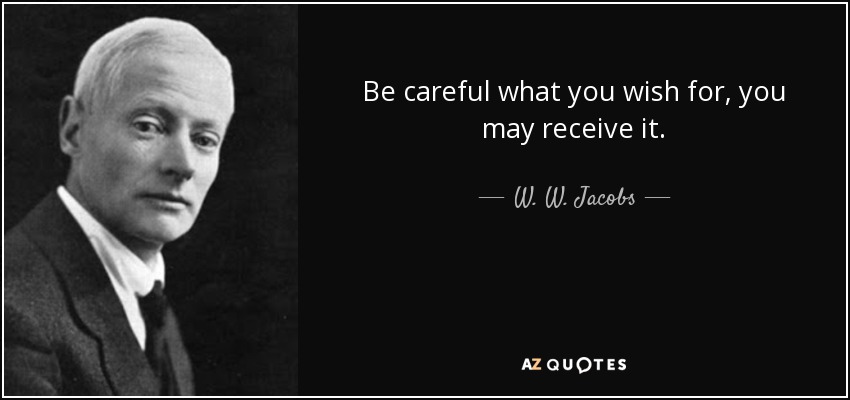
The passage you see above comes from a recent chat he had with Steven D. Grumbine, host of the Macro & Cheese podcast (audio and transcript). By itself, the fact Grumbine decided to make a meme suggests how much commentary that bit must have caused among Leftists.

Saturday, 27 February 2021

Bits and Pieces (xi)


Joe Biden just couldn’t wait. Barely 37 days after his inauguration, he’s already got brown, foreign blood in his Democratic hands.

His very woke supporters – rainbow flags and all – are duly impressed. In particular, they loved the professionalism with which his Defence Secretary, Steve Austin, announced the deed:

(source)

(source)

A glorious victory in the fight for racial equality.

Saturday, 12 December 2020

The UBI in Australia?

(source)


Before talking about something, it’s always a good idea to understand what is it one is talking about. That applies to everything, the much-talked about UBI included.

It’s not clear, however, that people talking about the UBI really understand what it is.

So, let’s try that.

UBI stands for Universal Basic Income. “Basic income” refers to “a periodic cash payment unconditionally delivered to all on an individual basis, without means-test or work requirement”.

“Universal” highlights something present in that definition: all members of a community are entitled to the UBI. In Australia that would mean that the Government regularly pays every citizen/resident an amount of money – presumably equal – no strings attached.

Last but not least, implicit is the idea that the UBI is permanent.

By itself this definition raises some evident questions (for example: How much money those individuals would be paid? Where is that money coming from?). They are important but the answers to them depend on many things, including what money is. So, we’ll bypass them.

Friday, 27 November 2020

Where all Aussie Talking Heads go to Die.


Australian housing is the subject confounding all and sundry would-be economic prophets, particularly those presenting themselves as mavericks. And after the GFC the population of econo-mavericks exploded.

The prototype of that creature would be Steve Keen, the wannabe-Copernicus cum Chicken Little old bloke whose repeated and repeatedly failed prophecies of housing market doom inspired countless jokes.

There are other, however, less known examples. Say, the Unconventional Economist (aka Leith van Onselen) and the Macrobusiness crew.

Wednesday, 2 September 2020

So, Where do Profits Come From?


There we go! Geronimooooo! (source)

For the first time since 1991 Australia registered two consecutive falls in its quarterly GDP figures: we’re officially in recession.

Today ABS released national accounts data corresponding to the June-August quarter and the picture ain’t pretty: GDP growth of -7.0%, the largest quarterly fall on record.

Those interested in those numbers can go here:

(source)

Wednesday, 5 August 2020

As Seen on the Internet.


You’ve gotta love the level of commentary from former Toyota production engineers.
“Marx may be surprised to now learn that ownership of the means of production is not the path to riches in an internationally competitive market place at least when that production is located in the developed world. Off-shoring of production to developing world ‘work houses’ can however be very profitable.”

Tuesday, 28 July 2020

So, I Actually Hate the JG, Who Knew?

This is not rocket science, Brian (see also).

A recent exchange I had with online MMTer Brian Romanchuk -- from Canada -- about one of Chris Dillow’s posts turned out to be full of unsuspected revelations. Readers may find it as enlightening as I did.

Dillow, following Michal Kalecki’s famous 1943 essay “The Political Aspects of Full Employment”, argued that full employment (therefore a Job Guarantee) is unlikely in democratic capitalism.

(Arguably, the priority for so-called Keynesian economics should go to Kalecki and not to Keynes, at least if one believes Joan Robinson – probably the second name in the pantheon of “Keynesian” economists and contemporary of both men – and Prof. Bill Mitchell, one of MMT’s founders.)

Bear with me.

Saturday, 25 July 2020

The Week that Was.


The talk of the week was the Economic and Fiscal Update delivered jointly last Thursday by federal Treasurer Josh Frydenberg and federal Minister for Finances Mathias Cormann.

The main figures? Here goes, courtesy of The New Daily:

(source)

And this:

(source)

Tuesday, 23 June 2020

The IPA and Per Capita: Two Peas in a Pod.


Yesterday Alan Kohler published a piece calling to end the debt and deficit fallacy. He is -- as I am -- worried about all the talk of paying the debt. Not just that, in that column he makes a positive reference to MMT and to Stephanie Kelton’s new book “The Deficit Myth”. And, get this, that appeared in the pages of The Australian, flagship of the Murdoch presstitute.

The panic scorn from COALition bigwigs was as predictable as it was quick to come. First in order of seniority in the federal Government was Mathias Cormann (the Arnie Schwarzenegger soundalike, who is -- or might have been -- a lawyer in his native Belgium):


Saturday, 16 May 2020

Why Banks as Intermediaries?


Last time we saw that banks act as intermediaries between the Morrison Government and the Reserve Bank of Australia, Australia’s central bank. Although banks acquire the bonds the Government issues, the RBA is their ultimate purchaser. The banks, however, get interests for that.

The RBA could have chosen a different scheme. For instance, it could have funded the Government. But that’s not on, as David Taylor adds. Why not? What service those banks provide?

Let’s try to understand that.

Tuesday, 12 May 2020

Sometimes Consistency is Costly.


In the previous post we discussed how COVID-19 changed the economic discourse about fiscal deficit spending. Here we’ll attempt to gain a deeper insight from that.

As argued previously, last March politicians, experts, journalists, and businesspeople muted their usual objections to large fiscal deficit spending. No argy bargy, no talking heads on TV formulating Very Serious (™) warnings. It’s almost as if the notions of inflation, crowding out and free markets had been magically forgotten.

Another usual stumbling block laid on the way of fiscal spending (namely the question “how will you pay for that?”) fared better, but only slightly. That I am aware, nobody seem to have asked that question when the measures were announced or when they were presented and approved in Parliament. Nevertheless, soon afterwards commentators began asking that.

Those commentators, I suppose, decided for belated consistency. Just like gloating sometimes can be justified, consistency can be fatally costly.

Wednesday, 6 May 2020

Sometimes Gloating is Justified.


“Long-term unemployed NewStart recipients have been telling us how interesting it is that now that wealthier people — the people who are not ‘meant’ to be unemployed — are unemployed, that they’re getting all these concessions.
“That the Government can click their fingers and double the NewStart rate and waive now a lot of the punitive eligibility requirements.” — Jeremy Poxon, from the Australian Unemployed Workers’ Union, as quoted by the ABC’s Daniel Ziffer.

Although the sentence “I told you so” leaves the sweetest taste in the mouths uttering it, gloating is frowned upon. Too bad, for current events warrant MMTers the right to gloat.

More importantly, as Poxon’s example suggests, events seem to provide common people some of the insights MMT offers. In particular, that the zero-sum game of “responsible budget management”, where one’s gain necessarily comes from another’s loss, is a scam.

Thursday, 2 April 2020

Two Peas in a Pod.


These words were uttered today (13:17 AEDT) by Prime Minister Scott Morrison, a conservative leader in the “centre-right, libertarian, conservative” Liberal Party of Australia and the first Evangelical to hold that job:
There are no more unions or bosses. There are just Australians now. That is all that matters. An Australian national interest and all Australians working together and I thank all of those who are coming together in that spirit and that will be very important as we move to put in place the arrangements that we are for this jobseeker program and the many things that relate to that.”
While this was Neil Wilson, a well-known MMT enthusiast and self-described leftist, a few days back (March 29, 2020 at 14:06):
Always worth remembering that bankers and capitalists are workers too. They work, earn and consume. And they also save a lot – which is part of the problem.”
You’ve heard the phrase “like two peas in a pod”, I trust.

Friday, 7 June 2019

Getting all Tied Up (5)


This series considers Paul Mason’s “Risks are ‘a Thing’… and so is the Death of Capitalism”, a critique of MMT.

In the previous post I argued that Mason’ s choice of Prof. Ferguson’s views as emblematic of the theoretical differences between Marxism and MMT was problematic.

Thus, so far in this series I’ve focused on things I believe Mason got wrong. But it’s time to go into the things he got right.

There may not be a theoretically “irreconcilable split” between Marxism and MMT, as Ferguson claims. However, to me and in terms of policy recommendation, things look different. Mason pointed to this passage in Ferguson’s article
“Rather it [MMT] implicitly de-prioritizes gravity’s causality in political and economic processes, showing how the ideal conditions the real via money’s distributed pyramidal structure”.
That was a good choice.

Friday, 31 May 2019

Getting all Tied Up (4)

This series considers Paul Mason’s “Risks are ‘a Thing’… and so is the Death of Capitalism”, a critique of MMT.

In the previous post I argued that Prof. Tcherneva’s quote doesn’t support Mason’s “finding” of a monetary theory of value native to MMT.

To buttress his case on the alleged differences between MMT and Marxism Mason invokes Prof. Scott Ferguson’s article “Some Remarks on MMT & Marxism”, from where Mason takes this quote, which, in his opinion, sums up neatly said differences:
Marxism assumes that money is a private, alienating, and crisis-ridden exchange relationship that ought to be overcome. Yet MMT holds money to be a boundless public utility that, while by no means untroubled, is well-equipped to actualize radical collectivist ends.
Ferguson’s views on the differences between Marxism and MMT are the subject of this post.

Friday, 24 May 2019

Getting all Tied Up (3)


This series considers Paul Mason’s “Risks are ‘a Thing’… and so is the Death of Capitalism”, a critique of MMT.

Mason believes to have detected in MMT a monetary theory of value. In the previous post I argued that is just a mirage. So, where did he take a wrong turn?

Much like Marxists, MMTers write a lot. Out of the ever expanding MMT literature, academic and popular, this single sentence, taken from one of Prof. Pavlina Tcherneva’s papers, is the smoking gun proving the existence of an MMT ToV: “since the currency is a public monopoly, the government has at its disposal a direct way of determining its value (Mason’s emphasis).

Friday, 17 May 2019

Getting all Tied Up (2)


This series considers Paul Mason’s “Risks are ‘a Thing’… and so is the Death of Capitalism”, a critique of MMT.

The previous post discussed Mason’s political doubts about tying the Green New Deal to MMT. Although that is evidently an urgent concern, by itself it has little theoretical implications for Marxists. The focus of this and the next posts are the two subheadings “What does MMT say?”, “What’s wrong with MMT?”, where Mason expresses his views on what MMT is.

Thursday, 9 May 2019

Getting all Tied Up.


(right-click to open a larger image in a separate tab)

The big and tiresome MMT versus everybody else punch-up seems to be abating. Finally. Readers may guess the whole thing has left me unimpressed.

But my expectations about the part of the debate involving mainstream economists were low to begin with, so their bit in the debate didn’t surprise me. What surprised me, in the worst possible way, was how awful the MMT/Marxists debate was.

Commenting recently on that, Prof. Bill Mitchell, one of MMT founders, writes that Marxists are getting all tied up on MMT.

As both a Marxist and a sort of MMT sympathiser, I reached the conclusion he is right, unfortunately. But there’s more to that.

Friday, 3 May 2019

Bits and Pieces: Aussie Elections.


(source)

A perennial whinge of liberal/Leftish middle-class intellectuals, at least in rich English-speaking countries, is the torpitude and turpitude of their local “(white) working class”. Because of its innate intellectual and moral weakness, the “(white) working class” must of necessity subordinate itself to a higher authority. Luckily, that authority is precisely the one those esteemed intellectuals are selflessly willing to provide.

Friday, 12 April 2019

Liberal Democracy and Ideology as Farce.


I believe liberal democracy, at least as practiced in Western advanced nations, is a farce. I’m sure readers have noticed. In fact, I suspect many would agree.

Some, however, may object to that.

Well, I’ll attempt to substantiate my claim. To that end I’ll use a local example. Overseas readers are free to judge whether that kind of thing could happen in their own places of residence.