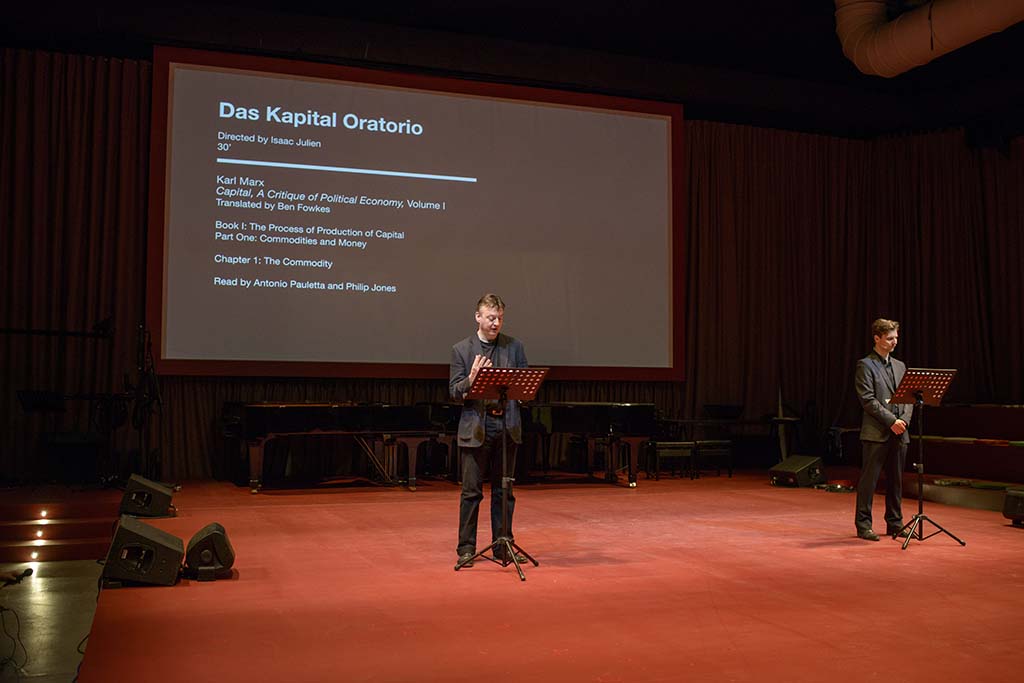
Linkin Park's "Burn it Down" video still speaks a lot to me.
It matches well with Ricardo Bellver's "Fuente del Ángel Caído" in the Buen Retiro Park in Madrid:
----------
RIP Chester Bennington.
Image Credits:[A] Detail of the Ángel Caído de Bellver, crowning the eponymous monument in the Parque del Buen Retiro in Madrid, Spain. Author: Laussy. My usage of the file does not suggest its author's endorsement of me or of the usage itself. Licenced under GNU Free Documentation License. Wikipedia.
A bookish angel whose studies turned into a blasphemer and a rebel against the Creator, an idle and womanising aristocratic youth who rediscovered his own version of Catholic faith after being dumped by his guardian angel, and a librarian with an unhealthy attachment to books are the main characters of Anatole France's "The Revolt of the Angels".
Around these three characters, whose paths criss-cross, France, the 1921 Nobel Prize in Literature winner, weaves a story set in early 20th century Paris, in 35 short vignettes, telling their frequently small, occasionally large, personal adventures and dramas. Surprisingly and in contrast to the supernatural nature of its protagonist and his epic quest, those episodes, often told with charm and a subtle, benign humour, are eminently down to earth, providing a glimpse into the final years of the French Belle Époque.
The setting is a polished clean, impersonal room; control consoles, covered by electronic displays and buttons, surround a group of dignitaries, all of them professionally dressed, in the elegant but sober style one has come to associate with important people.
They are observing the world from far above.
A man in his fifties runs the show. He is handsome, with that kind of unexceptional good looks appropriate to his job. His hair is already turning grey. And what a show he is running: epic images of global destruction observed from a distance of hundreds of kilometres.
In awe with the apocalyptic power he feels it's his, the man only manages to say: "Oh. It's beautiful".
Texan brothers Tanner and Toby Howard, two of the main characters in David Mackenzie's 2016 neo-Western "Hell or High Water", never had much to say for the American Dream. The dilapidated towns with their boarded-up shops, overgrown yards, run-down farms, derelict cars, dishevelled caravans, and ubiquitous pawnshop street signs which the brothers share with scruffy, gun-toting, trigger-happy inhabitants tell much of their backstory.
It's October, 1862. CSA Army medic Newton ("Newt") Knight, already sceptical about the real motivation behind the secession and appalled by the carnage he witnessed in the battlefield, deserted. Upon returning to his farm in Jones County, Mississippi, Knight witnesses the abuses visited by the Confederate authorities upon the white farm women left behind. Knight intervenes and is forced to join a band of runaway slaves, hiding in the swamps. Welcomed by the former slaves, Knight befriends and leads them, after finding they share a common cause.
"The history of all hitherto existing society is the history of class struggles. "Freeman and slave, patrician and plebeian, lord and serf, guild-master and journeyman, in a word, oppressor and oppressed, stood in constant opposition to one another, carried on an uninterrupted, now hidden, now open fight, a fight that each time ended, either in a revolutionary reconstitution of society at large, or in the common ruin of the contending classes." (Karl Marx/Friedrich Engels, "The Communist Manifesto")
"[I]f the whole of modern society is not to perish, a revolution in the mode of production and distribution must take place, a revolution which will put an end to all class distinctions.(…) [O]n this fact, and not on the conceptions of justice and injustice held by any armchair philosopher, is modern socialism's confidence in victory founded." (Friedrich Engels, "Anti-Dühring")
Ariadne Birnberg writes "Most Beautiful Maynard", the story of her grandmother, Naomi Bentwich, and her lifelong, unrequited, and presumably platonic love for John Maynard Keynes.
Given the differences between its protagonists -- the naively idealistic Jewish woman, and the anti-Semitic gay/bisexual man; Naomi, of middle class extraction, acting as secretary for Keynes, Eton alumnus, elitist, financial speculator, bureaucrat, academic, eugenicist and member of the cultural avant-garde -- the tale Birnberg relates could have easily turned into a farce.
Instead, Birnberg delivers a fascinating and humane account, where the unavoidable absurd is balanced by Birnberg's respect for the subject: Naomi in the foreground, Keynes in the shadow (the brief appearances other notables make, particularly Keynes' biographers, are somewhat less flattering).
----------
In our times of instant celebrity, it would be easy to dismiss Naomi's story as another star-struck fan's harmless eccentricity. It would be deeply short-sighted, too.
She wasn't the only one falling for Keynes' spell. And she wasn't the last one worshipping that hero. There must have been something especial to the man, something evident to many -- then and now -- but unfathomable to me.
In this sense, Birnberg's story works wonderfully as a metaphor for Keynesianism.
----------
A promising first delivery by Birnberg, and a great read for Keynes' fans.
Without mentioning her by name, Keynesian economist Paul Krugman ("Conservatives and Keynes", May 5, 2015) writes on the Confidence Fairy.
In my opinion, whether he realises it or not, this is the key part of his post:
"Keynesian economics, if true, would mean that governments [and economists, I'd add] don't have to be deeply concerned about business confidence, and don't have to respond to recessions by slashing social programs."
However, can you write "Keynesian economics" without "Animal Spirits"?
----------
One who would probably deny that is Prof. Roger Farmer (Distinguished Professor of Economics, at UCLA, apparently a non-Post Keynesian economist): he proposes the adoption of Animal Spirits as a new fundamental for Keynesian economics.
"In standard dynamic stochastic general equilibrium (DSGE) models there is a single rational expectations equilibrium. In the models I work with there are many rational expectations equilibria. Not just one, or two or three: but an infinite dimensional continuum of them. That is not a problem. It is an opportunity that I exploit to model the idea that beliefs matter. In my work, I close my models by adding an equation that I call a 'belief function'. The belief function is an effective way of operationalizing the Old Keynesian assumption of 'animal spirits'. It is a forecasting rule that explains how people use current information to predict the future. That rule replaces the classical assumption that the quantity of labor demanded is always equal to the quantity of labor supplied."
Now (and this is the thing), how would that fit with Keynes' -- the oldest Keynesian -- Animal Spirits, is something I cannot fathom. To paraphrase Him (about whose words I was reminded recently): "I simply do not know".
----------
Incidentally, Paul Krugman alludes to Farmer in "Choose Your Heterodoxy" (25-04-2015). An appropriate title, no doubt. But that's not why I draw your attention to it. What caught my eye is this:
"As I've written many times, economists who knew their Hicks have actually done extremely well at predicting the effects of monetary and fiscal policy since the 2008 crisis, whereas those who sneered at this old-fashioned stuff have been wrong about almost everything."
So, economists -- at least those who "know their Hicks" -- can predict things extremely well.
Fair enough. One is entitled to bragging rights if one makes a prediction and it comes to pass. Why should that be interesting?
Well, because other Keynesian economists (like Wren-Lewis and Syll) say economic prediction is not possible. In fact, neoclassical Marxist Chris Dillow agrees with them on that:
"Macroeconomics - when done well, which is only some of the time - does the former [explanation]. This might be all that can be expected. Whatever else is wrong with macro theory, the inability to foresee recessions is not the problem."
Over a month ago, the talk of the day in the U.K. was the letter that over 100 business leaders signed in support of the Conservative Party, warning against the effects a Labour victory in the general elections would have had on business confidence:
"We believe a change in course will threaten jobs and deter investment. This would send a negative message about Britain and put the recovery at risk. In a personal capacity we therefore sign this letter."
With the elections held and its results widely known, Magpie News is at liberty to reveal details about the discussion previous to the letter's release.
A prominent liberal business man and patron of the arts proposed the inclusion of the following paragraph:
"This means, unfortunately, not only that slumps and depressions are exaggerated in degree, but that economic prosperity is excessively dependent on a political and social atmosphere which is congenial to the average business man. If the fear of a Labour Government or a New Deal depresses enterprise, this need not be the result either of a reasonable calculation or of a plot with political intent; it is the mere consequence of upsetting the delicate balance of spontaneous optimism. In estimating the prospects of investment, we must have regard, therefore, to the nerves and hysteria and even the digestions and reactions to the weather of those upon whose spontaneous activity it largely depends."
Sources close to Magpie News report that the other signatories did not feel comfortable signing the letter with that paragraph included and requested its deletion.
Asked by our sources why he felt uncomfortable, one of the signatories -- requesting anonymity -- commented dryly: "I don't want to be associated with Lord Keynes' hysteria, let alone his intestinal fortitude".
It was not possible to contact Lord Keynes for his comments on this latest snub, following previous examples like this.
That was Pavarotti (29) playing in 1964 from Leninist Russia. (I am sure there are many famous and magnificent Anglo-Irish tenors: drop me a line and I'll be happy to credit them)
It's springime, for my northern hemisphere friends for capitalism. It always is.
For Rammstein (and here, a surprisingly literate industrial rock band; actually, an east German Neue Deutsche Härte band, much better in studio albums than in their live recordings), it must also "spring". From 2005 Rammstein's album "Rosenrot":
But who must "spring"?
Kapitalismus, springen und nehmen Sie mit Ihnen die Eliten, bitte.
Together
with “2001: A Space Odyssey”, but in a different way, Ridley
Scott’s 1982 “Blade Runner” (based on the 1968 novel “Do Androids Dream of
Electric Sheep?” by Philip K. Dick), starring Harrison Ford, Rutger Hauer and
Sean Young, is another of my all-time favourite sci-fi movies.
Without
giving away too much on its plot, in my opinion, the film combines deeply human reflections about the inevitability of death and about what the
human condition entails, with clearly political elements of Nietzschean thought:
the slave/master, Übermensch/Untermensch contrast.
This scene,
however, gives an unexpected twist to everything Nietzschean in the film:
After acknowledging
the distinction Übermensch/Untermensch, Scott seems to ask his viewers “who’s who”? It's clear who is the Übermensch and who is the Untermensch, but who is the master and who, the slave?
----------
From Vangelis’
superb soundtrack, “Blade Runner” end titles:
I imagine the world’s most reviled, slandered man, born in Trier, would have smiled.
Normally, when people outside of Ibero-America think of Ibero-American music, if they think of anything, they think of samba, bossa nova, salsa, maybe Tex-Mex (update: flamenco and tango). That's it.
Spain and Portugal themselves are assumed to have little of its own to add to the list.
Currently, no heterodox economist is more talked about than Yanis Varoufakis (and for good reasons, too). Here is one of my posts on Varoufakis: his views on Post-Modernism.
----------
As Tony Abbott may face next week a secret ballot from his party colleagues to decide his future as PM, I was reminded of this:
"Act One [prelude] [B]
"The banks of the river Scheldt.
"Near Antwerp, King Henry the Fowler of Saxony has assembled a group of Brabantine nobles and commoners to discuss affairs of state. He is dismayed to find the local political situation in disarray … and suddenly a knightly figure is seen approaching in a small boat drawn by a swan …"
"Act Three [finale, 'In fernem Land': i.e. in a foreign/distant land]
"The banks of the river Scheldt.
"… He narrates the story of the Holy Grail and its keepers, and how he … was sent …"
Unfortunately, I could not find both videos taken from the same production of Richard Wagner's "Lohengrin, romantic opera in three acts", so we have different orchestras, choirs and conductors: three different interpretations. Still, one can appreciate Lohengrin's leitmotif in both videos (hint: pay attention to the music accompanying Plácido Domingo). Wagner gave great importance to them.
Besides its undeniable beauty (I'll confess: I am a fan of Wagner), "Lohengrin" in many ways exemplifies the ideals of the nineteenth century European (indeed, global) romantic artistic and cultural movement: focus on individuals and emotions, nature reflecting those emotions, exotic/medieval settings, the hero, struggle against all odds, tragedy and fate, among others. It has a clear popular appeal (see here, however, for the other side of the romantic coin).
A more modern and equally magnificent (in fact, critically acclaimed) performance of "In fernem Land" follows below. The tenor is Jonas Kaufmann, in the role of Lohengrin. The contrast between both performances should prove instructive. While still recognizably romantic, viewers will find it visually different; the idea is to give the performance a more modern look, consonant with modern sensibilities (hint: compare both tenors' body languages, facial expression, and clothing and stage lighting).
Note, however, the soprano, Anja Harteros, in the role of Elsa von Brabant, trying to stop Lohengrin's speech and her final dismay: their fate is tragically sealed by Lohengrin's answer to her otherwise natural question.
Image Credits and Notes:
[A] The beautiful photo opening this post comes from Justin Mier's blog, specializing in photography; I believe he is the author, to whom all credits are due and all rights belong. It seems appropriate to this subject because one could almost see the Swan Knight emerging from the fog and approaching the shore.
[B] All quotes from the booklet included with the CD box set The RCA Opera Treasury - Lohengrin (1997, BMG Classics).
I have mixed feelings towards John Boorman's 1972 film "Deliverance", with Jon Voight, Burt Reynolds, Ned Beatty, and Ronny Cox.
There are several things in that movie that make me uncomfortable. Among them, the fact they didn't credit the author and performers of the piece below:
But, credit where credit is due, "Feudin' Banjos" (also referred to as "Dueling Banjos") is a great piece and it was composed by Arthur "Guitar Boogie" Smith (apparently performed for the film by Eric Weissberg and Steve Mandell).
Frankly, I like the piece. I also liked the contemptuous dignity in Lonnie's face (played by Billy Redden) at the end of the scene. One is left to wonder how many times Lonnie has seen people like the urban middle-class Bobby Trippe (played by Ned Beatty).
It's sad how rural Americans (once depicted in John Steinbeck's "The Grapes of Wrath" as the noble Joads, full of greatness in their misery) have been debased in the eyes of their fellow Americans.
I was too young to watch it the year it was released, but I didn't have to wait much. Sometime in the early 1970s I watched it. It was the years of the Apollo Program and the future seemed like a great adventure.
It didn't last long. By 1982 with Ridley Scott's “Blade Runner”, and Michael Radford's “1984”, the future started to look somewhat bleaker. I was growing up, I guess. And over time, my impressions just got worse. (Shortly after Jan 1, 2001, I remember telling a workmate something like: “Gee, the future looks surprisingly like the past, only crappier”. Don't ask me today.)
If you haven't seen it: it's a great movie. There's little dialogue. Keir Dullea, as Commander Dave Bowman, is terrific.
But the soundtrack is, well, just superb. Given that I'm far from being Nietzsche's greatest fan, you'll be surprised to read that one of the highlights is Richard Strauss' “Also sprach Zarathustra”; but the compositions by Aram Khachaturian ("Gayane") and György Ligeti are not far behind.
Anyway (and this is the by far the absolute high water mark of the movie for me, thanks to that other Strauss, performed by the Vienna Philharmonic, and directed by Herbert von Karajan) this is how the future looked like to me back in the early 1970s:
Well, I'll wish readers a happy 2015. Hopefully, the next year will look more like “2001” than “1984”.
PS: The interruption in the video means a lot to me, even if it's only accidental.
“And he gathered them [i.e. 'the kings of the earth and of the whole world'] together into a place called in the Hebrew tongue Armageddon”. Revelation 16:16 (KJV)
The prophesied war of the end of the world refers -- naturally -- to future events, yes?
Well, maybe. But, just for the sake of the argument, what if the war had already been fought? And, what if the good guys had actually lost?
If you ever read a Spanish language novel (even in an English translation), you could do much worse than picking Mario Vargas Llosa's 1981 "La Guerra del Fin del Mundo" ("The War of the End of the World" is its English title), based on true historical events (the War of Canudos, in Brazil).
----------
Sobradinho (o sertão vai virar mar -- i.e. the desert will turn into a sea), by Sá e Guarabyra (Portuguese lyrics, my adaptation from this version)
O homem chega e já desfaz a natureza
Tira gente, põe represa, diz que tudo vai mudar
O São Francisco, lá pra cima da Bahia
Diz que dia, menos dia, vai subir bem devagar E passo a passo, vai cumprindo a profecia Do beato que dizia que o sertão ia alagar
O sertão vai virar mar, dá no coração
O medo que algum dia o mar também vire sertão
Vai virar mar, dá no coração
O medo que algum dia o mar também vire sertão
Adeus Remanso, Casa Nova, Santa Sé
Adeus Pilão Arcado, vem o rio te engolir
Debaixo d'água, lá se vai a vida inteira
Por cima da cachoeira, o Gaiola vai subir
Vai ter barragem no salto do Sobradinho
E o povo vai se embora com medo de se afogar
O sertão vai virar mar, dá no coração
O medo que algum dia o mar também vire sertão
Vai virar mar, dá no coração
O medo que algum dia o mar também vire sertão
Remanso, Casa Nova, Santa Sé, Pilão Arcado
Sobradinho, adeus, adeus, adeus
----------
It happened, somehow.
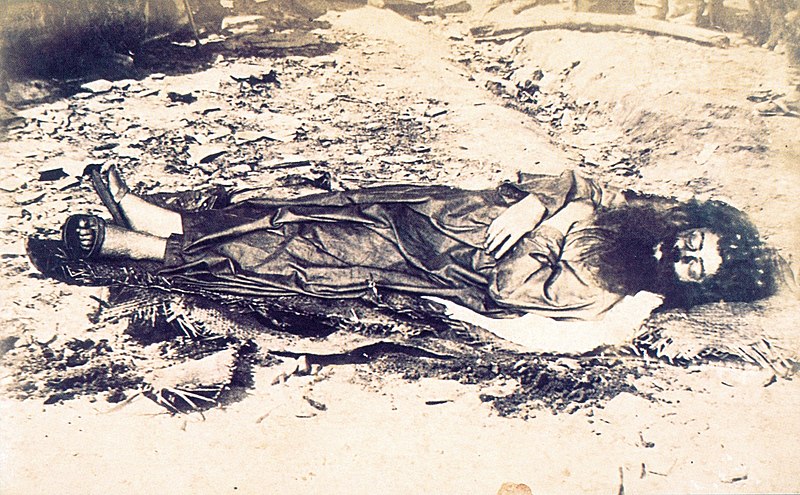
Canudos, circa 1895. [A]
Canudos survivors surrounded by the Brazilian Army, 1897. [B]
Antonio Conselheiro, by Flávio de Barros. [C]
"After 17 years [i.e. in 2013], Canudos re-emerges with drought". (source)
----------
"Colonel Macedo nods. 'Did you see him die?'
"The little old woman shakes her head and clacks her tongue, as though sucking on something.
" 'He got away, then?'
"The little old woman shakes her head again, encircled by the eyes of the women prisoners.
" 'Archangels took him up to heaven,' she says, clacking her tongue. 'I saw them.' "
There is redemption, even for us, the rabble.
----------
And the desert did turn into a sea (o sertão alagou mesmo, né?), as the saint Counselor (o beato Conselheiro) said.
Image Credits:
[A] Canudos. Image in the public domain. Source: Wikipedia.
[B] Survivors. Image in the public domain. Source: Wikipedia.
[C] The only photograph of Antonio Conselheiro, the mystic rebel and spiritual leader of the War of Canudos (1896-1897). Author: Flávio de Barros. Image in the public domain. Source: Wikipedia.
Peter Radford has "been on quite a kick lately [here, here, here, and here] criticizing mainstream economics as being fundamentally anti-democratic".
I agree with him on everything, but then he writes:
"Economists don't want an 'expert led democracy' at all. They want a society led by Platonic philosopher kings, with economists being those very folk. Economists, those on the right anyway, don't have time for democracy".
The philosopher king delusion and the anti-democratic feeling may be quite prevalent among mainstream, free-market, economists, as Radford correctly says, but they are also powerful leitmotifs behind "progressive liberals":
"The attitude attributed to Keynes is antidemocratic only if one asserts that (…) democracy requires extensive popular participation". [*]
"Bah!" says the Keynes true-believer. "The author of that quote must be some ultra-free-market person."
Well, no. That was Conrad P. Waligorski (professor of political science at the University of Arkansas at Fayetteville and author of "Liberal Economics and Democracy" and "The Political Theory of Conservative Economists"), defending Keynes against the charges free-marketeer economists ("such as James Buchanan, Milton Friedman, F. A. Hayek, William Hutt and Richard Wagner") made against him being anti-democratic.
So, this is the time of the year when Wikipedia asks for donations.
Normally I would feel a moral duty; this year, however, I will most definitely not contribute. Why not? Because of this.
As a non-profit organization, Wikipedia depends on the good-will it establishes among its users. But you cannot publish shit content, refusing to correct it after you were made aware of it and cultivate good-will, all at the same time.
I would, however, suggest Wikipedia to revise their complaints policy. You know, there's always a next year.
----------
And speaking of next year, The Guardian has a really cool pictorial article on what 2015 has in store in space exploration.
This caught my eye:
"Getting to the Moon on a shoestring might seem ambitious, but with the Google Lunar XPrize deadline fixed for December next year, the precedent could very soon be set."
After Virgin Galactic's tragic SpaceShipTwo loss, this may well make or break private sector space exploration.
----------
A 2014 movie release which totally escaped my attention, "Snowpiercer", directed by Bong Joon-ho, and starring Chris Evans, Song Kang-ho, Tilda Swinton, Jamie Bell, Octavia Spencer, John Hurt, and Ed Harris was an excellent surprise on DVD: never the slow-motion train crash simile was better applied to capitalism.
The character Mason (an Ayn Rand lookalike, with English accent), played by Swinton, was particularly memorable.
Mason explains her views on society in the video clip below. Those views go a long way into explaining why democracy is not popular among pundits, taking us full-circle back to Peter Radford's comment:
That's how these people see themselves and how they see you; the place they occupy in the pecking order and the place you occupy. Must I say more?
Notes:
[*] 1994, "Keynes and democracy", Social Science Journal, vol. 31, no. 1, p. 79.
This may be just me, but I find that film directors often leave the most remarkable of the musical score for the last scene and ending credits.
Ang Lee's 2000 "Crouching Tiger, Hidden Dragon" is a case in point. Starring Chow Yun-fat, the magnificent Michelle Yeoh, and Zhang Ziyi, its superb music score was composed by Tan Dun.
This is the final scene and credits and the cello solo performed by Yo-Yo Ma ("Eternal Vow"):
Update (13/12/2014):
Another version (in some ways, better; but you won't see a beautiful fallen angel flying into eternity):