Wednesday, 7 November 2012

The Lagarde List Affair.


After Greek journalist Kostas Vaxevanis published (October 28) a list containing the names of 2,059 alleged high-profile tax evaders, the Troika occupation Greek government ordered his arrest and trial. The BBC covered the whole affair, day by day. Here is a timeline of the affair, in headlines:

Sunday, October 28 (last updated at 16:28 GMT)
Greece arrests journalist over 'Lagarde List' banks leak
Monday, October 29 (last updated at 23:23 GMT)
Greece bank leak reporter Costas Vaxevanis sent to trial
"The prosecutor issued a warrant for Vaxevanis's arrest because he published a list of names without special permission and violated the law on personal data".
Thursday, November 1 (last updated at 16:39 GMT)
Greek journalist Costas Vaxevanis on trial over bank list
"French authorities gave the names to their Greek counterparts two years ago, but documents were never investigated".
Thursday, November 1 (last updated at 20:15 GMT)
Greek bank list editor Costas Vaxevanis acquitted
"Lawyers for Mr Vaxevanis, 46, (...) said no-one on the list had actually complained of a breach of privacy.
"After a one-day trial, a court in Athens found Mr Vaxevanis innocent.
(...)
"The BBC's Mark Lowen in Athens says the swift ruling will be an embarrassment to the Greek government".
If you ask me, to call this an embarrassment is an understatement.

----------

Consider prominent PASOK politician George Papaconstantinou:
"Then Greek Finance minister, George Papaconstantinou, said precisely last Wednesday in the Greek Parliament that he did not know what happened to the [then French Finance minister Christine] Lagarde list's original version". (See here, in Spanish, my translation)
Aussie readers might remember Papaconstantinou's words when he spoke last May 12, in SBS TV Insight show:
"So nobody is outside this, nobody is innocent to the crime. Of course politicians bear the biggest burden, and of course they will be punished for this, as they are being punished (...)."
For a man so ready to re-distribute responsibilities for the Greek fiasco, Papaconstantinou seems strangely uninterested on determining who should "bear the biggest burden".

Just like the current Greek government, that appears more interested in harassing (very clumsily and ineffectively, at that) the whistle-blower than in punishing those who should "bear the biggest burden":


That's a bit more than an "embarrassment".

Sunday, 4 November 2012

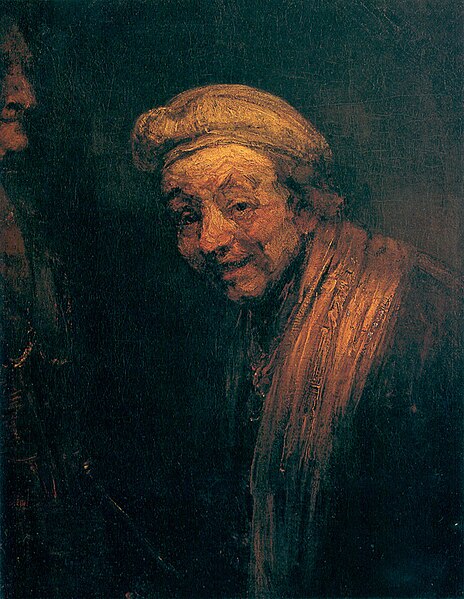
Toxic Rembrandt.

Rembrandt as Zeuxis,
c. 1662. [A]
Over a year ago a number of Australian city councils initiated a class action against RBS (ABN AMRO before 2010), S&P and Local Government Financial Services for losses suffered with the Rembrandt CPDO. (See here)

Today Michael West (Fairfax Media) informs us that "The Federal Court's Justice Jayne Jagot has accepted the evidence from 12 NSW councils - who claimed they had been duped into buying a toxic financial product - that the ratings agency Standard & Poor's was little more than a lap dog for slick merchant bankers".

Rembrandt CPDO had been rated AAA by S&P, in spite of being a highly leveraged and risky financial product, which lost 90% of its value a few months after the councils purchased it.

The court ordered the 3 financial agencies to pay AUD30 million, plus interests, to the plaintiffs; S&P claims it intends to appeal.

This decision, together with rulings against Lehman Brothers a few weeks ago, could have international implications:
"It remains to be seen whether the Court's finding that S&P engaged in misleading and deceptive conduct in assigning its coveted-AAA rating to the CPDO will open the flood gates for actions against credit rating agencies in relation to other structured products such as CDOs. Logically, CDOs are also in the gun. Most enjoyed the top rating, most blew up."

Image Credits:
[A] Self Portrait as Zeuxis, c. 1662. Wikipedia.

The Ironies of Monopoly.

An extraordinary article by Christopher Ketcham, from Harper's Magazine, on the history of the popular board game Monopoly (h/t Occasional Links & Commentary), which I highly recommend.

Henry George (1839-1897) at 26,
American political economist. [A]
It turns out that the game was invented in 1903 by a largely forgotten Maryland actress, by the name of Lizzie Magie, as a device to teach the thought of Henry George, the once popular American reformist socialist who intended to bring about his own brand of socialism by taxing landowners, while abolishing all other taxes.

Although Magie conceived the basic idea, by the time her version of the game (called the Landlord's Game) began to be commercialized, gamers had spread and further developed the game, until its putative inventor, Charles Darrow, finally learned of it and marketed his own homemade sets, sought and received patent and sold the rights to game publisher Parker Brothers:
"Sometime in 1932, Darrow copied the layout of the board, the rules of play, the property names, the deed values, and the Chance cards, and made his own version of the game. His only innovation seems to have been to claim the mantle of sole inventor. He would soon be assumed into the pantheon of American heroes of commerce."
Apart from the irony in this ending, the narrative is enriched by a wealth of fascinating details: some magnificent quotations (Andrew Carnegie: "The greatest astonishment of my life was the discovery that the man who does the work is not the man who gets rich"), anecdotes and descriptions from a Monopoly tournament, a fascinating footnote on the work of Michael Hudson. There are also passing references to Mark Twain, Leo Tolstoy and Marx.

----------

There were Marxists among George's followers. Some of them wrote enthusiastically to Marx, praising George and his writings.

Marx was not impressed, however:
"All these 'socialists' (...) have this much in common that they leave wage labour and therefore capitalist production in existence and try to bamboozle themselves or the world into believing that if ground rent were transformed into a state tax all the evils of capitalist production would disappear of themselves".
Considering how the article describes the end of the movement, he might have had a point:
"By the time of his death in 1897, when 100,000 New Yorkers lined up to view his body in state, George's 'great idea' was already, as Tolstoy would lament in 1908, on the long road to being forgotten".
But Marx considered that not all the effort was wasted:
"On the other hand George's book, like the sensation it has made with you, is significant because it is a first, if unsuccessful, attempt at emancipation from the orthodox political economy".
I'd add that George's followers, while misguided, meant well. Their efforts and creativity, if ultimately fruitless, deserved better and are to be commended.

Image Credits:
[A] Henry George (1839-1897) at 26, American political economist. Wikipedia.

Wednesday, 31 October 2012

Oz: the Anorexic Country.

Last year, shortly after winning the state elections, Barry O'Farrell, NSW Premier, announced a AUD4.5bn "black hole".

Although O'Farrell (Liberal Party) had promised not to touch the state public service, public finances were in such a catastrophic state that radical austerity was desperately needed. In conservative-speak: there was much fat to trim.

O'Farrell wasn't alone. According to a Crikey analysis (July), "38,000 public service job cuts have been announced at the federal and state levels over the past few years. A further 24,000 positions are on the line (the federal Coalition says it will cull 12,000 positions, while the Queensland government has hinted at a possible further 12,000-20,000 job losses)".

For NSW, the "2012-13 budget set a 1.2% per annum reduction in labour costs across the public service, which unions say equates to 10,000 jobs", 5,000 of which are "voluntary" redundancies. And that without counting cuts in health (AUD3 bn over four years), plus education cuts. Thank goodness the Liberal Party guys are such brilliant economic managers, always ready to take "courageous" decisions (ask shadow federal treasurer Joe Hockey).

----------

Do you believe in miracles? Well, they do happen. And the one delivering the miracle was no one other than the NSW Auditor-General, Peter Achterstraat:
"An expected deficit of $337 million [announced by state treasurer Mike Baird] in the middle of June became a surplus of $680 million by the end of June."
And how did this miracle happen?
"There were 37 errors of over $20 million each in accounts the Auditor-General's office identified and corrected.
" 'I would say that a $1 million error is unfortunate, a $10 million error is undesirable but a $100 million error is totally unacceptable,' he said.
"This is not acceptable for an entity the size of NSW that manages billions of dollars of assets and public funds.
"There is a lack of effective financial management capability in this state and it must improve."
----------

In the meantime, in what conservative think-tankers and spin-masters will argue is an entirely unrelated development, this is how unemployment (trend, seasonally adjusted, according to the ABS's latest release 6202.0 - Labour Force, Australia, Sep 2012):


Thanks for nothing, Barry, Mike, Tony, Joe, Julia, and Wayne. Keep trimming the fat.