"Whig history (or Whig Historiography) is the approach to historiography which presents the past as an inevitable progression towards ever greater liberty and enlightenment, culminating in modern forms of liberal democracy and constitutional monarchy." (See here)I hate this kind of polemic, I really do and I try to avoid it like the plague. Regrettably, I'll have to make an exception this time.
Mark Harrison (Professor of Economics, University of Warwick, contributor to Pieria, profile) wrote two typical TINA articles (i.e. "Liberal capitalism isn't perfect", but the alternative is necessarily a "nightmare": so, shut up, quit complaining, and stick to Liberal capitalism, link, link):
"At one point I thought of calling this blog 'Alternatives to Capitalism: the Search for a Red Herring' (a 'red herring' is something that doesn't exist but people look for it anyway.). But I realized that would have been wrong, because alternatives to capitalism have actually existed. The problem with the alternatives is not that we cannot find them. It is that the people who went searching for them fell into a dream and woke up to a nightmare."Normally, I'd leave that be. Frankly, while I am a communist, I am not in the business of whitewashing the crimes of Stalin, Ceausescu, Mao, Pol Pot, Honecker and their likes. I'm just not their defense attorney. If the idea is to judge them in the court of history, my role shall be as a witness, not as a lawyer.
But Prof. Harrison is not acting as a prosecutor only: he is advancing his own view of what's best for the future. Prof. Harrison is also acting as a salesman for "Liberal capitalism". And that's his prerogative; but I, for one, won't buy it.
So, I'll allow myself a few comments to explain why. Basically, because I have a very good memory and I do read newspapers.
----------
The first thing about the Harrison pieces is that, in reality, they do not compare capitalism with socialism: they compare a very selected bit of 20th century capitalism with all of 20th century socialism. But capitalism is way older than that: Prof. Harrison, an economist, should know that.
Further, Prof. Harrison disowns Nazi/Fascism as non-liberal. What exactly is the difference between the liberal and the non-liberal flavours? Aren't "entrepreneurs" motivated by profit in the liberal version? Don't they own wealth? Can't they fund election campaigns and bribe bureaucrats with that wealth? Can Prof. Harrison show one example of historical liberal capitalism?
At any rate, Nazi/Fascism was no alternative to capitalism, as Prof. Harrison claims: Nazi/Fascism was really-existing capitalism. IG Farben, Siemens, Volkswagen, Deutsche Bank, Krupp, Lufthansa and even Hugo Boss (to name just a few big German corporate names, leaving American, Swiss, French, Swedish and Italian firms out of the story) have many reasons to be grateful to those guys. Search for Monowitz (aka Auschwitz III).
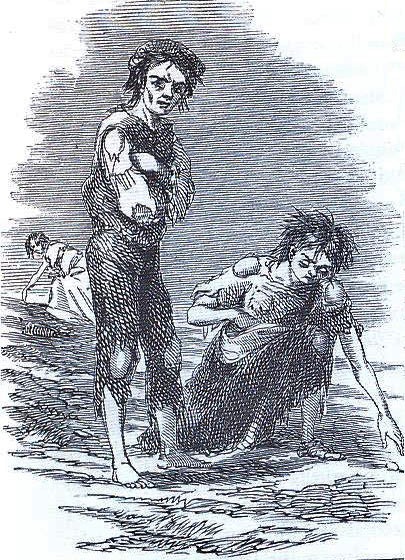
But even if we arbitrarily and conservatively limited capitalism to what came after the Industrial Revolution (leaving, therefore, the mercantilist period out, with the extremely bloody colonization of the Americas), excluding the unsavory Nazi/Fascism bit, he should account for part of the 18th century and all of the 19th: but he didn't mention the Irish Potato Famine of 1845-47 (largely under Sir Robert Peel's Whig government!), nothing said about continental Europe, or the Indian Famines (under British capitalist rule!); he didn't mention the neo-colonialism in Africa or Asia. Why not?
What about the depressions during the 19th century? The Great Depression, the 1970s stagflation, the Latin American debt crisis, the Asian crisis, and the Russian default? I know that people have short memories, but Prof. Harrison didn't even mention the current global recession, for Christ's sake!
And what about the bloody repression during the 1848 European Revolutions, weren't they carried out by non-communist governments? And 1871, during the Paris Commune?
I can understand Prof. Harrison not knowing about South America. That's an "arcane" subject, so I suppose only specialists know about it, and although he delves in history, he's no historian. Fine. So he never heard about the Paraguayan War, when British and European interests pushed Argentina, Brazil and Uruguay to crush Paraguay, which was industrializing.
I'd say the American Civil War should be a less arcane topic. But he doesn't mention, either, the behavior of the Union and Confederacy. Does he mean it was up to scratch or that those weren't really capitalist governments? Not a word on the Indian Wars, the Boer Wars or the Boxer Rebellions.
Prof. Harrison says he doesn't know how many people the Imperial Japanese Army killed in China. Fair enough; let me give him a hand. The Chinese government claims something like 20-25 million people, in China alone. Is that figure good enough, or will he suggest some revisionism?
Maybe Prof. Harrison should try a Google search on the names Vietnam, Laos, Cambodia, Algeria, Mozambique, Angola, Namibia, Indonesia, Zimbabwe/Rhodesia, Congo (both Brazzaville and Zaire), Sierra Leone, Kenya, and actually, pretty much all Latin America. In each and every single one of these countries we had either anti-colonial wars against a capitalist metropolis, a war against a capitalist racist government or a capitalist government waging war against workers and peasants.
Okay, that was long ago. But Prof. Harrison doesn't even mention Afghanistan and Iraq! He is an economist, so geography is not his forte, either; okay. I could point these places in a map for him, so that he can be sure those places actually exist.
----------
The second thing I noticed is that Prof. Harrison does not include the whole of really existing capitalism: he considers capitalist governments, only.
But, what about the private sector? No mention whatsoever, which is kind of strange for a liberal. I mean, to forget the private sector????
No reference to organized crime, for instance. But if someone could claim to embody the ideal of the Randian entrepreneur, as I said elsewhere, is the organized crime capo: they actually fight the government, like, with weapons and bombs! What about the Opium Wars and the Colombian and Mexican drug wars? The American mob? If their motive is profit and they sell stuff, aren't these, by definition, entrepreneurs?
No reference to Bhopal, or Deep Horizon, or Dhaka or to fracking; nothing about financial fraud (from John Law, to Charles Ponzi, to the S&L scandal, to Banco Ambrosiano, to Enron, to Bernie Madoff, to Goldman Sachs' "shitty deals", to LIBOR fixing).
What about the narco-right wing Latin American dictatorships, a la Manuel Noriega? The very definition of private/public sector partnerships: the police/army kill trade unionists, the bosses lower wages and, with the savings, pay the cops kick backs.
In Guatemala alone, 200 to 300 thousand people were murdered, largely under the government of general José Efraín Ríos Montt, who was convicted of genocide but let go free. Of Ríos Montt, U.S. President Ronald Reagan said: he is a "man of great personal integrity". Incidentally, the notoriously violent Mexican drug cartel Los Zetas was founded, among others, by veteran Kaibiles, former counter-insurgency troops under Ríos Montt.
What about the United Fruit Co. (creators of banana republics), or the mercenary armies; the Dearborn (MI) massacre, or the Battle of Mount Blair (WV); Standard Oil. Did Prof. Harrison ever hear about Major General Smedley D. Butler (U.S. Marine Corp.):
"I spent 33 years and four months in active military service and during that period I spent most of my time as a high class muscle man for Big Business, for Wall Street and the bankers".What about the right-wing 1970 narco-cup in Bolivia, when Klaus Barbie was an advisor to the putsch, as he once was to the CIA in the hunt for Ché Guevara?
Has Prof. forgotten about Augusto Pinochet's Nazi links? I mean, wasn't Pinochet the good dictator, the Liberal one? Surely, he remembers Friedrich August von Hayek and Milton Friedman?
Okay, Prof. Harrison forgot all that. We are all human and memory is fickle.
What about more recent cases: the murder of African and Latin American activists ordered by Royal Dutch Shell and Coca Cola? Did Prof. Harrison ever hear about sweatshops and Foxconn? What about the blood diamonds and arms dealing, and people smuggling, trafficking and slavery (currently some 20 million worldwide, they say). Isn't that the private sector at its most authentic?
And the latest: organ trafficking!
----------
Either Prof. Harrison has a penchant for understatements ("Liberal capitalism isn't perfect"), some serious memory problems, or he has never read a newspaper.
In any case, he should really try a better sales pitch: there's no way that I'd buy into "capitalism", in either of its varieties (really-existing or fairy-tale). And that's my prerogative.
How about you?