Commenter 1: "It is simply misleading to lump in social democrats and socialists together. There are no similarities between them."
Commenter 2: "This appears to me correct. I think Hayek et al were more concerned with worker control over anything else. It followed from their understanding of economics -- and their lauding of the entrepreneur.
"Social democrats - especially Fabians - had and have a tendency to be elitist (Keynes is a classic example of this). They have a distinct - and I feel, correct - distrust of the masses running their own economic system democratically (through collective, Soviets, syndicates etc)." (see comment thread here)
The quote above is real.
I'm sure readers will find huge inaccuracies in that comment. For starters: the statement that there are no similarities between social democrats and socialists. Historically, it's hard to imagine a greater nonsense. Further, currently the terms "socialism" and "social democracy" have become practically interchangeable. Which is quite unfortunate, for what little is left of the socialists.
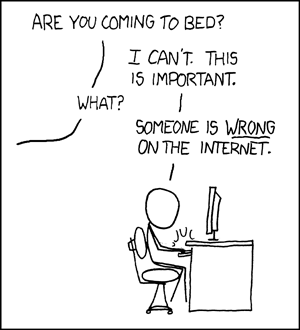
But that's neither why I reproduce that quote, nor is online ignorance any news.
 |
| [A] |
What caught my attention is that, if you look past the unapologetic asininity, you'll actually find two interesting facts in that comment.
Firstly, it reminds us of something many lefties prefer to ignore: whatever else they were, Keynes and the
Fabian "social democrats" (as Commenter 2 would have) were indeed
elitists. Commenter 2 is right on that. Paul Samuelson, for instance, also said that Keynes (like Bertrand Russell)
"was an elitist exponent of the middle classes" (see
here)
In that sense, Keynes and the Fabian
socialists were no different from "Hayek et al".
Whatever differences Hayek and Keynes had in a number of areas (and I am not implying these differences were unimportant), they both shared something fundamental: a belief that there is a natural order to society, a necessary social hierarchy.
It just so happens that in said hierarchy, they and their peers were at the top; and the rest of us at the bottom. For them, that's how things are and that's how they should be.
Theirs is a hard job, but someone's got to do it...
As Commenter 2 put it:
"I think Hayek et al were more concerned with worker control over anything else. (...) They [i.e. "Hayek et al" plus Keynes and the Fabians] have a distinct - and I feel, correct - distrust of the masses running their own economic system democratically (through collective, Soviets, syndicates etc)."
Note very carefully now: Commenter 2 is
speculating about the reasons Hayek and Keynes had for their "concern with worker control". They weren't concerned because they thought worker control was inherently totalitarian and there was no democratic alternative to an elitist society. No. They, like Commenter 2, knew that worker control was a democratic alternative.
The problem, according to Commenter 2, is that they
distrusted that democratic alternative. They did not approve of it:
"They distrust of the masses running their own economic system democratically". And Commenter 2 feels it, it is correct.
The perceptive reader may oppose that, strictly speaking, the passage above is only Commenter 2's guess about something he cannot possibly know with any certainty (i.e. Hayek and Keynes' intimate reasons to be anti-socialists), and that it says more about Commenter 2's fears and bigotry than about Hayek and Keynes'.
This is where I indignantly reply to the perceptive reader: "How dare you! Commenter 2 is a serious, responsible intellectual!"
Just kidding! I'll say: "My point, precisely".
Commenter 2 was expressing his own class prejudices, and trying to make them look acceptable by hiding behind Hayek and Keynes (and you wouldn't
dare arguing with them, would you?). In reality, he detests socialism because
it is intrinsically anti-elitist: it is democratic.
Commenter 2 sees himself as a member of the elites: his own approval is relevant to evaluate Hayek and Keynes on this ("
and, I feel, correct").
----------
Whatever the reasons Hayek and Keynes had to be anti-socialists (and I wouldn't rush to dismiss Commenter 2's opinion on that) we are left with two opposing visions of how to manage a hierarchical society on behalf of the elites.
Corey Robin, in a recent
essay, which I urge you to read, argued that for Hayek freedom is conditional on property and is proportional, in a way, to it; in Hayek's "liberal government" one class commands, while the other is free only to choose between obeying or starving. That's one end, the Hayek's yin, in the Hayek-Keynes hierarchical society continuum.
Paraphrasing
Joseph Weydemeyer: a
dictatorship of the bourgeoisie, and a particularly brutal one, at that.
At the other end of the Hayek-Keynes continuum it's Keynes' yang: a "democracy" where the same propertied few are still in command, and the same majority still needs to obey; the big difference is that now, during economic downturns, the enlightened few will not allow the
deserving majority to starve, provided that majority accept their betters' God-given right to rule.
Still a dictatorship of the bourgeoisie, but an
"enlightened" one: you will be spied upon, to make sure you are deserving. Guantanamo Bay, "enhanced interrogation" and "selective targeting" will only happen if you fail to prove yourself reasonable, trusting, meek, and stupid enough (i.e. "trustworthy") every day.
Blessed are the meek...
----------
I've gone through one of the two interesting facts in that quote. What about the other?
You'll have to take my word for it, for I am not interested in controversy with Commenter 2 and his kind (and if this sounds contemptuous, that's intentional), but the fact is, that quote comes from a blog popular with MMTers, Post-Keynesians (or PKers) and sundry lefties (plus their customary sparring buddies from the Austrian blogosphere).
Commenter 2, as it happens, is a well-known "online" PKer, one sharing an almost medieval, Austrian outlook on class and society. It takes all sorts, I guess.
Let me be crystal clear: with this I don't mean to put all Post-Keynesians, particularly respected professors, in the same bag with Commenter 2. I am convinced many PKers (not only scholars, but also their more serious online following), would sincerely disown those views. I suspect many rank-and-file PKers will be surprised with the connection.
Further (and readers must understand this), those comments do not devalue Post-Keynesian theoretical insights.
So, having explained what I don't mean to do with this post, I must explain what I do mean. I am warning my readers to a risk: the risk of assuming that the label "Post-Keynesian" is synonymous with progressive or liberal, or - worse error - with socialist or democrat.
It is not. It will never be. To use a statistical metaphor: there may be a positive PK/progressive correlation, but correlation does not imply causation.
By extension, the application of some otherwise interesting PK insights, like MMT (insights that exceed Keynes' in scope, btw), could improve our current situation, but could also be used to further the class domination of our masters. This and no other is Commenter 2's goal and in this I believe he faithfully follows Keynes. So, with all due respect, I'll remain skeptical on PK ideas as long-term solutions.
Nor should socialists/Marxists harbor undue illusions about progressives and liberals, however genuinely wise and well-intentioned (and I'll repeat this: there are many who are indeed wise and well-intentioned).
Here I'll urge you to read a very important
essay by Bhaskar Sunkara (editor,
Jacobin magazine), from where this passage was extracted:
"Liberalism's original sin lies in its lack of a dynamic theory of power. Much of its discourse is still fixated on an eighteenth-century Enlightenment fantasy of the 'Republic of Letters,' which paints politics as a salon discussion between polite people with competing ideas. The best program, when well argued by the wise and well-intentioned, is assumed to prevail in the end. Political action is disconnected, in this worldview, from the bloody entanglement of interests and passions that mark our lived existence".
 |
| [B] |
In that quote, again you see the yin and yang of elites discussing our future, while the rest of us watch humbly from the sidelines, always mindful of being polite, reasonable and moderate, never radical, socialist, or what's the same, "fanatical" (God forbid!). Children should be seen but never heard.
Sunkara's views are not the Bible; but he does make some good points.
Update: I've changed my mind (29-07-2014) and added a link to the post where those comments appear.
Image Credits:
[A] Duty Calls. Source:
xkcd.com or
here
[B] Yin and Yang. Author:
Klem. Public domain.
Wikimedia.